Monday, November 28, 2011

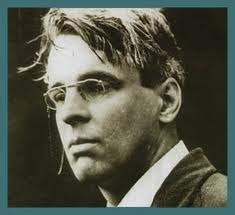
W.B.Yeats. Father of The Celtic Revival.


W.B. Yeats and his promotion of Irish heritage, early work up to 1900.


“Whose tales seem fragrant with turf smoke”


William Butler Yeats 1865-1939

Yeats was born into a protestant Anglo-Irish landowning class; Anglo-Irish Protestant groups supported a literary revival whose writers wrote in English about the ancient myths and legends of Ireland. Most members of this minority considered themselves English people who happened to be born in Ireland, Yeats however, was adamant in affirming his Irish nationality. He lived in London for many years during his childhood and even kept a home there in his adult life but he never forgot his cultural roots.

He became involved with the Celtic Revival; this was a movement that sought to promote the spirit of Ireland’s heritage against the cultural influences of English rule in Ireland during the Victorian period. Although Yeats never learned the Irish tongue himself he drew extensively from the language and the ancient Irish myths, legends, and folklore to reveal the connection between those traditions, the individual, and the nation and by understanding this connection he came to realise the true reality that was hidden from those who failed to see it.

In 1885, Yeats met the Irish nationalist John O'Leary, who was instrumental in arranging for the publication of Yeats's first poems in The Dublin University Review and in directing Yeats's attention to native Irish sources for subject matter. Under the influence of O'Leary, Yeats took up the cause of Gaelic writers at a time when most of the native Irish literature was in danger of being lost as the result of England's attempts to anglicise Ireland through a ban on the Gaelic language.

Yeats believed that the “de-Anglicising" of Ireland did not depend on the preservation of its literature in the Gaelic language. He wanted writers to translate the tales of the history and heritage of Ireland into English whilst retaining the best of ancient Irish literature that was represented in its rhythm and style. He also wanted to build a bridge between the two and write about the histories and romances of the great Gaelic heroes and heroines of the past. Yeats said “let us make those books known to the people” it was his belief that this would do more to “de-Anglicise” Ireland than clinging to the Gaelic tongue of yesteryear. Yeats accepted that the teaching of Irish played a part in our heritage but that we should not base our hopes of nationhood upon it. He said “Remember it is the tales of Cú chulainn and of Deirdre of the sorrows that are immortal and not the tongue that first told them”.

W. B. Yeats became the champion of Celtic culture and his poetry was a celebration of all things Gaelic. Irish legend gave Yeats a way to be something more than a symbolist (Brown, 2001, p83). He wrote in a letter to the French critic and journalist Henry Davray on19th March 1896, that “I am an Irish poet looking to my own people for my ultimate best audience and trying to express the things that interest them and which will make them care for the land in which they live”.

He was devoted to the cause of Irish nationalism and promoted Irish heritage through his use of material from the ancient sagas within his poetry. The publication in 1889 when Yeats was twenty-four of The Wanderings of Osian which was based on the legend of an Irish hero was a defining moment, not only in Irish literary history, but also its political history. Yeats's book, based on the Fenian cycle, brought Irish mythology to the Irish people in English -'the language' as he pointed out 'in which modern Ireland thinks and does its business’. He also published several volumes of poetry during this period, notably Poems (1895) and The Wind Among the Reeds (1899), which also demonstrated his use of Irish folklore and legend.

Yeats knew that many Irish people of the time did not have the benefit of an education and what little they did have was heavily influenced by the Catholic church, a church that believed in the teaching of the Irish language whether you wanted to learn it or not. He also believed, as did most of the protestant writers of the Celtic Revival that the Catholic Church had no desire for the teaching of myth, legend, and folklore which they saw as promoting a belief in pagan gods. In what could be seen as arrogance, Yeats saw himself as the father of the Celtic Revival and because of this he incorporated folklore and myth into his works.

The feeling I get when I read some of Yeats poetry is sadness, as if he is lamenting a time long gone. He seems to be looking for somewhere that no longer exists, and this comes through in such poems as The Stolen Child who yearns to escape from a place that is “more full of weeping than you can understand” or The Lake Isle of Innisfree in which he yearns to escape from the chaos and corruption that surrounds him to a place of peace and tranquillity. Maybe this is symbolic of the turmoil he feels as Yeats writings are so full of symbolism. In his autobiography, Yeats writes that his poem was influenced by his reading of American writer Henry David Thoreau’s Walden (1854), which describes Thoreau’s experiment of living alone in a small hut in the woods on Walden Pond, outside Concord, Massachusetts. Yeats warns that failing to look at ourselves as others see us, 'we may go mad someday' (revolt?) and the English will destroy the beautiful Celtic culture and replace it with what they will. Yeats died in 1939 and although buried in France his body was eventually returned to Ireland and is now buried in the Protestant churchyard, Drumcliff, Co. Sligo. Ironically the person in charge of this operation for the Irish Government was Sean MacBride, son of Maud Gonne MacBride.

Bottom image: Yeats gravestone in Drumcliff graveyard with the inscription “Cast a cold eye on life, on Death, Horseman pass by”

Wednesday, November 23, 2011

Padraig Pearse. Irish Patriot.


Patrick Henry Pearse.

Born: November 10, 1879 in Dublin
Died: May 3, 1916 in Dublin

Patrick Henry Pearse (Padraig MacPiarais) is known as an Irish patriot, scholar, teacher and poet. He was a student of literature and history and wanted to free Ireland from the rule of the British. In 1908, he established St. Edna’s College to educate young Irish citizens about Irish customs, language, and beliefs. Pearse was a key figure in organizing the Easter Rising. He had been an active member of the Irish Republican Brotherhood and was named an affiliate of its Supreme Council. He wrote a number of position papers and poems to express his intellectual and emotional feelings about the pursuit of Irish freedom. Perhaps the most memorable of these is “Mise Éire”:


“Mise Éire” (in Irish first)

Mise Éire
Sine mé ná an Chailleach Bhéarra.
Mór mo ghlóir:
Mé a rug Cúchulainn croga.

Mór mo náir:
Mo chlann féin a dhíol a máthair.
Mise Éire:
Uaigni mé ná an Chailleach Bhéarra.


“I am Ireland”

I am Ireland:
I am older than the Old Woman of Beare.
Great my glory:
I that bore Cuchulainn the valiant.

Great my shame:
My own children that sold their mother.
I am Ireland:
I am lonelier than the Old Woman of Beare.

In this poem Pearse describes Ireland’s struggle using familiar themes. He sees Ireland as an old woman who once experienced the glory of having a son who stood against the invader. He was the mythical warrior Cú Chulainn who even when mortally wounded strapped himself to a rock in order to remain standing and continued to fight. However, the old woman also experienced shame as she sees her children sell her to the invaders, a story as old as Ireland herself. Our history is rife with tales of betrayal from within our own ranks.

Pearse hopes to rouse nationalist feelings by drawing on mythology and the concept of Ireland as a defenceless old woman. Pearse, by including her in Mise Eire introduces a feeling of bitterness, something that you see more and more off as you read his poetry but it is also rich in symbolism as he also uses the figure of Cú Chulainn, the archetypal Celtic war hero, as symbolic of the kind of figure that a faltering Irish culture needed to resist the occupying influences, to restore the traditional values of Irish life which Pearse would once again have experienced in Connemara.

Interestingly, the figure of Cú Chulainn was eventually used to commemorate the Easter Rising both in a statute in the Dublin GPO and on the old Irish ten shilling coin (in 1966). Mise Eire is a sad poem, raising as it does many different feelings in the reader. A story of an old mother deserted and sold to Britain who laments her loneliness.

From the cradle to the grave.

There is also a certain irony in Pearse’s life. It is as if An Chailleach Bhéarra, the old hag of mythology has reached out from the mist of time and placed a hand upon his shoulder. Perhaps on Nov. 10, 1879, at 27 Great Brunswick St., Dublin, as the mother and father looked down at their newborn son, they had an idea of what his future held. That may explain why they named him Patrick Henry Pearse. Their son would grow to be the embodiment of the words of the American patriot Patrick Henry, who said in the Virginia Convention on March 23, 1775: "I know not what course others might take, but as for me, give me liberty or give me death!" These words would have been an appropriate epitaph on the gravestone of Pearse, the leader of the Easter Rising 1916. The final irony for Pearse was that his father was a stonemason and Patrick Henry Pearse was to end his life in the stone breakers yard of Kilmainham Prison.

The lower image is of the stone breakers yard where Pardraig Pearse was executed.

Sunday, November 20, 2011

The Dearg-due.

The Dearg-due.


Once there was a fair maiden named Dearg-due who was so beautiful that she was known throughout the country. She could have married any man that she wanted, but fell in love with a local peasant. This was unacceptable to her father, who forced her into an arranged marriage with a wealthy man to secure the financial future of his family. This new husband treated Dearg-due very badly and she eventually committed suicide although some say it was a broken heart that killed her.

Her burial was a simple affair and she was buried in a small churchyard, supposedly located near Strongbow's Tree, in the village of Waterford. The only one to mourn her death was the young peasant boy who visited her grave everyday tearfully praying for her to return to him. The story tells us that a year after her death she rose from her grave filled with vengeance, she went to the house of her father and finding him asleep she placed her lips over his and sucked the life force out of him. She then went to the house of her husband and in a frenzied attack she not only sucked the breath of life out of him but also his blood. It is said that the surge of blood rushing through her body made her feel alive once more.

It is believed that Dearg-due rises from the grave to seduce men and lure them to their deaths by draining their blood. She is always in the form of a beautiful woman. Legend differs on how often she rises from the grave: some say she returns with every full moon, others a few times a year, while others say she rises but once a year on the anniversary of her death. Most versions of the Dearg-due story claim that she can transform into a bat-like creature, while the other versions make no mention of shapeshifting. Some legends say she does not drink blood, but sucks out the life force from men until they slowly wither and die. All thoughts of her young peasant boy long forgotten and of him we hear no more. The legend of the Dearg-due is born.

According to the legend, the only way to defeat Dearg-due is to pile stones on her grave. While this will not 'kill' her, it will prevent her from rising and hold her at bay. Although sometimes they forget and once more she will roam the night. Some legends say you can only escape if you replace yourself with another victim, thus continuing the circle of death. Some people think that "Dracula" is based upon the Dearg-due, and they argue that Stoker had never travelled to Eastern Europe, so he would only know the beliefs of the areas from travellers. They go on to say that "Dracula" was written during Ireland's great "Celtic Revival". They believe that Stoker took the name "Dracula" from Dreach-Fhoula, pronounced droc'ola, and means "bad or tainted blood" (you will find this on one of my previous posts).

The Du'n Dreach-Fhoula or the Castle of the Blood Visage is supposed to be a fortress guarding the pass in the Magillycuddy reeks in Kerry and it is believed to be inhabited by blood-drinking fairies although it has never been found and even the locals do not know of its location, and even if they do they are not telling.

On the other side of the argument are Irish mythologists who say that the recorded Celtic stories bear no mention of the Dearg-due at all. However, they can't explain the persistence of the oral stories of this Irish vampire. I’ll leave you to decide.

Tuesday, November 1, 2011

The Reed. October 28th - November 24th.


NGETAL/REED - October 28 - November 24

People born under this sign have a powerful personal charm, some would even call it magnetic for it is found to be very attractive to a certain type of individual. However, those who are overly sensitive may not find you to their liking. You are able to overcome obstacles that would stump many others and you tend to stick to a strict moral code and this allows you to have a clear view of what you seek in life. You are imaginative and this can be a problem for it will also manifest itself in a jealousy that can even turn violent so be careful. You have powerful friends and this will help you in your lust for power both within and without and you will exhibit traits of leadership.

You are sometimes called secretive but this can be a good thing for you are able to keep secrets. It also means that you will dig deep in order to find the truth even when it has been hidden under many layers. You love a good story and will be drawn to folklore, myth, and legends. Scandal and gossip will be like bread and butter to you but these tendencies also make you a good historian, archaeologist or journalist. You have a great love of people for in them you find all the complexities of life, they interest and intrigue you. You love trying to interpret the thoughts and actions of those you meet and for this reason your sign is called The Inquisitor. You would make an excellent detective for you have the added ability of being able to coax people into talking to you and you can also manipulate others to your will. It’s a good job that you also have a sense of honour and truth so most of your scheming is harmless.

As stated previously you can make powerful friends but as in all things there is the opposite side and you must be wary of making powerful enemies. You will command respect even from your enemies but always remember respect must be earned. You are a survivor and a caring, passionate lover, you will offer a helping hand to those who need it but be careful of those who may see this as a sign of weakness for they will attempt to bite off that hand. Hostility will always surround you for you have a strong sense of purpose and a strong will and there will always be those who will be jealous and feel threatened in your prescense.

You are fearless, proud and independent with a great strength of character. You thrive on challenge and have a strong belief in your own ability, your own destiny. Temper that strength with mercy and understanding and you will go far. May the blessings of Samhain light your way.

Remember this is just a bit of craic and not to be taken seriously,

May I take this opportunity to welcome all those who have joined this blog. I hope you take a moment to look through previous posts and that you find something of interest on these dark winter nights.
Keep smiling


BB

Silentowl.

Saturday, October 22, 2011

Imprisonment of children who had committed no crime.


One of the things you don’t seem to think of when you think of the Irish Famine of 1845-1850 is the plight of children. They were affected in many ways other than the obvious ones of starvation and disease. I have recently visited Kilmainham prison museum in Dublin as part of a college trip and it caused me to stop and think. Kilmainham is probably best known as the last place on earth that various Irish political prisoners spent their days, and some may recognise it as the prison location for such films as In The Name of the Father (1993) or The Italian Job (1969). We were given a guided tour of the facility and it was on this tour that the guide began to tell us of those other prisoners that you don’t hear of, the forgotten children of the Great Famine some as young as Five years old.

Many of the children were sent to adult prisons for the most trivial reasons. During the famine years the influx of country people to the cities was frightening, they couldn’t get work, and they had no money and no way to obtain sustenance, so the only option open to them was begging for food. The government answer was to bring out a Vagrancy Law making it an offence to beg for food. Others started to steal food, they had nothing to lose and at least they would get fed in prison. The government answer was to drastically reduce food rations in the prison in order to deter people from crime, this only served to increase the misery of the inmates but it saved the authorities money so they were quite happy to implement the new rules.

Conditions in the Workhouse were so bad that it is recorded that people committed offences in order to be removed to the prisons. If a child ran away they were arrested for the theft of the workhouse clothes they were wearing at the time. A boy of fourteen was sentenced to one month in prison on the Tread Mill for this offence. In Neagh 1849 it was reported that fourteen children were escorted through the streets by the police. Thirteen of these were little boys who were to be whipped at the local jail because they were caught throwing stones at the workhouse master. Some children were even abandoned outside the gates as their parents thought that it was the only way they might survive the famine. Conditions in the prisons were horrendous. Punishment and hard labour were the orders of the day,

Children were made to sleep five or more to a cell only big enough to have housed one adult previously, some would sleep on the floor some would sleep on hammocks. No water, no sanitation, no heat and if you were lucky the jailer gave each cell ONE candle to supply the only source of heat and light (one per cell). During the famine there were that many children in Kilmainham prison the jailers threw straw on the floors of the corridors and made the children sleep there. There were no uniforms supplied, the rags you arrived in were the rags that you would leave in. The majority of the prisoners would be thrown into overcrowded cells to sleep on the damp floor with rats running all over them. They had lice infested straw to cover them. Children as young as five were also imprisoned in these conditions.

Exercise in the prison yard consisted of walking with your eyes down (looking to the cobbles), boys walked clockwise, girls anti-clockwise. If you looked up it was taken that you were looking up to the light, the source of god’s forgiveness, if you were seen by the jailer then you received twelve lashes for you had no right looking for god’s forgiveness. It was common practice to administer twelve lashes a week to each child to prepare them for the reform schools.

Some prisons had a Tread Mill. The Tread Mill was a machine that was used to grind corn in the flour mills, but it was a form of hard labour used in some of the prisons. There were long handles around the centre piece. The children had to hold on to these and walk around in circles pushing it along, but if one child fell it took the other children a few minutes to stop, usually not before the fallen child had been trampled on. The children had to stay on this for five hours in the summer and four hours in the winter and all this was done in silence, any talking, singing, or whistling resulted in the whip. Imprisoned for being an orphan, disablement, or abandonment, having committed no crime and receiving no sentence, some children had been in these prisons for years.

As I walked the dark damp corridors of Kilmainham I felt a great sadness for I found myself listening to the cries of an abandoned child as it called for its mother. How must these children have felt as they heard the dreaded footsteps of the jailer approach and the sound of the key as it turned in the lock? It would be so easy for me to believe that these corridors are haunted, not by the souls or spirits of those poor little children but by the earthbound spirits of those cursed to wander these corridors of pain for all eternity. I wonder how those responsible for this outrage fared. I cannot understand how those who professed to be Christian could do these things. “Suffer Little Children to come unto me” isn’t that what they would have you believe? and oh how they suffered. Thank the gods/godesses that we have lived through a time when we only complain about 'The Recession'.

My thanks to the guide at Kilmainham prison who gave me a lot to think about and even more to be thankful for.
Crimes and sentences of young children in Kilmainham Jail Dublin Ireland.

Alicia Kelly was only eight years old when she was sentenced to five months hard labour in March 1839 for stealing a cloak.

Jane Beerds who was nine years old was accused of stealing fowl in January 1840. She spent three months in the jail before being released in April after being found not guilty.

Michael and Patrick Reilly were aged twelve and thirteen years old in April 1833. They were both found guilty of stealing three ducks and a hen. They each received a sentence of three weeks in prison and a total of sixty lashes. They were whipped each week receiving twenty lashes at a time.

Mick Kearney, twelve and his younger brother Stephen, nine were convicted of stealing money in December 1838. They both received a sentence of four weeks imprisonment and were whipped once a week.

For stealing apples from a garden John Keegen aged eleven, got two months hard labour on 11th August 1833.

Upper Image: A lonely corridor in Kilmainham Prison (Now a museum).

Lower Image: The dreaded treadmill.

Sunday, October 16, 2011

The Penal Laws, 1691 -1829.


Before I embark on The Famine of 1845-50 I would just like to write a little piece on the Penal Laws that governed Ireland in the 18th century. The results of these laws included abject poverty for the rural Irish, a great and lasting hatred of the ruling classes and a suspicion of a law that favoured the English. This hatred and suspicion was to give rise to the secret societies and they became widespread for where could the Irish look to for protection? Certainly not to the Landlord, the judge, or the ruling classes for they all looked upon the Irish as the common enemy. Oak Boys, Ribbon Men, and White Boys began to dispense their own brand of justice and sought revenge against those who had turned on their own. The informer, the landlord’s man, and those who had taken advantage of the evicted. The Irish had began to learn how to conceal the truth, how to hold secret meetings and how to protect themselves from outsiders and this was to become a dangerous habit and a lesson in how to hate the invader for generations to come. An extremely unwise move for any government to make and although by the end of the 18th century many of the Penal Laws had been repealed, some of them were to remain in effect until catholic emancipation in 1829.


The object of the Penal Laws was to deprive the Irish of all civil life (Catholics) and reduce them to the most extreme and brutal conditions possible. They were denied an education, to have a profession or to hold down any public office. They were forbidden from engaging in trade or commerce, to own land, to vote, to bear arms or to own a horse that was worth more than five pounds. This was the background leading up to the Famine of 1845.

There are many stories that are told of the time of the Penal Law, one such tale concerns a young Irish man called Art O’Leary. He had been abroad serving as a Captain in the Austro-Hungarian army and had returned home with his horse from Vienna. He was married to Eileen O’Connell whose grandson was to be Daniel O’Connell the Liberator and great Irish hero. Art O’Leary had entered his horse in a race which it won easily, an English planter seeing this offered O’Leary five pounds for his horse but of course O’Leary refused it. He was immediately declared an outlaw and shortly afterwards shot through the heart, this was in 1773. The first his wife knew of this terrible murder was when the horse returned home without a rider

There is a haunting poem called The Dirge on the Death of Art O’Leary by his wife Eileen translated by Eleanor Hull. It is worth remembering that she composed this on the spot in the old tradition of the Irish Caoinead (pronounced “kween-eh”) meaning lament.

Lower image: The tomb of Art O’Leary in Kilcrea friary County Cork.

Tuesday, October 4, 2011

Samhain. Oiche Shamhna.


As we enter this month of October let us begin by looking at the festival of Samhain.


History of Samhain.
Samhain marks one of the two great doorways of the Celtic year, for the Celts divided the year into two seasons: the light and the dark, at Beltane on May 1st and Samhain on November 1st. Some believe that Samhain was the more important festival, marking the beginning of a whole new cycle, just as the Celtic day began at night. For it was understood that in dark silence comes whisperings of new beginnings, the stirring of the seed below the ground. Whereas Beltane welcomes in the summer with joyous celebrations at dawn, the most magically potent time of this festival is November Eve, the night of October 31st, known today of course, as Halloween.

Samhain (Scots Gaelic: Samhuinn) literally means “summer's end.” In Scotland and Ireland, Halloween is known as Oíche Shamhna, while in Wales it is Nos Calan Gaeaf, the eve of the winter's calend, or first. With the rise of Christianity, Samhain was changed to Hallowmas, or All Saints' Day, to commemorate the souls of the blessed dead who had been canonized that year, so the night before became popularly known as Halloween, All Hallows Eve, or Hollantide. November 2nd became All Souls Day, when prayers were to be offered to the souls of all who the departed and those who were waiting in Purgatory for entry into Heaven. Throughout the centuries, pagan and Christian beliefs intertwined in celebrations from Oct 31st through November 5th, all of which appear both to challenge the ascendancy of the dark and to revel in its mystery.

In the country year, Samhain marked the first day of winter, when the herders led the cattle and sheep down from their summer hillside pastures to the shelter of stable and byre. The hay that would feed them during the winter must be stored in sturdy thatched ricks, tied down securely against storms. Those destined for the table were slaughtered, after being ritually devoted to the gods in pagan times. All the harvest must be gathered in -- barley, oats, wheat, turnips, and apples -- for come November, the faeries would blast every growing plant with their breath, blighting any nuts and berries remaining on the hedgerows. Peat and wood for winter fires were stacked high by the hearth. It was a joyous time of family reunion, when all members of the household worked together baking, salting meat, and making preserves for the winter feasts to come. The endless horizons of summer gave way to a warm, dim and often smoky room; the symphony of summer sounds was replaced by a counterpoint of voices, young and old, human and animal.

In early Ireland, people gathered at the ritual centres of the tribes, for Samhain was the principal calendar feast of the year. The greatest assembly was the 'Feast of Tara,' focusing on the royal seat of the High King as the heart of the sacred land, the point of conception for the New Year. In every household throughout the country, hearth-fires were extinguished. All waited for the Druids to light the new fire of the year, not at Tara, but at Tlachtga, a hill twelve miles to the north-west. It marked the burial-place of Tlachtga, daughter of the great druid Mogh Ruith, who may once have been a goddess in her own right in a former age.

At all the turning points of the Celtic year, the gods drew near to Earth at Samhain, so many sacrifices and gifts were offered up in thanksgiving for the harvest. Personal prayers in the form of objects symbolizing the wishes of supplicants or ailments to be healed were cast into the fire, and at the end of the ceremonies, brands were lit from the great fire of Tara to re-kindle all the home fires of the tribe, as at Beltane. As they received the flame that marked this time of beginnings, people surely felt a sense of the kindling of new dreams, projects and hopes for the year to come. Rituals of Samhain mirror many Halloween practices today.

Many Samhain rituals, traditions, and customs have been passed down throughout the centuries, and are still practiced in various countries on Halloween today.

As a feast of divination, this was the night for peering into the future. There are so many types of divination that are traditional to Halloween it is possible to mention only a few. Girls were told to place hazelnuts along the front of the fire grate, each one to symbolize one of her suitors. She could then divine her future husband by chanting, “If you love me, pop and fly; if you hate me, burn and die.”

Several methods used the apple, that most popular of Halloween fruits. You should slice an apple through the equator (to reveal the five-pointed star within) and then eat it by candlelight before a mirror. Your future spouse will then appear over your shoulder. Or, peel an apple, making sure the peeling comes off in one long strand, reciting, “I pare this apple round and round again, My sweetheart’s name to flourish on the plain, I fling the unbroken paring o’er my head, My sweetheart’s letter on the ground to read.” Or, you might set a snail to crawl through the ashes of your hearth. The considerate little creature will then spell out the initial letter as it moves.

Bobbing for apples was actually a custom the Celts inherited from the Romans when conquered by the Roman Empire. Romans honoured the harvest god, Pomona, and because the apple was a venerated fruit, many rituals revolved around it. The Celts simply incorporated bobbing for apples, a divination game that originated with the Romans, into Samhain tradition.
Or
Bobbing for apples may well represent the remnants of a Pagan “baptism” rite called a seining, according to some writers. The water-filled tub is a latter-day Cauldron of Regeneration, into which the novice’s head is immersed. The fact that the participant in this folk game was usually blindfolded with hands tied behind the back also puts one in mind of a traditional Craft initiation ceremony.
Or
Bobbing for apples was a game of divination. Single girls looking for a mate would carve their initials onto an apple then put it into a bucket of water. Young men would take it in turns to ‘bob’ for an apple, the one they chose had the initials of their intended carved upon it.

Carving Jack O'Lanterns was a custom practiced by Irish children during Samhain. Using a potato or turnip, they would carve out an image and place a candle inside to pay tribute to Jack, an Irish villain so amoral that he was rejected by both god and devil. Legend says that Jack wandered the world, looking for a place to rest, finding it only in a carved-out vegetable. Later, when the Irish emigrated to America, pumpkins were used instead.

Some traditions say that the carved-out pumpkin originated from a Celtic practice of putting an antecedent's skull outside of their home during Samhain. Others say that the Jack O'Lantern was used to ward off evil spirits which were brought forth on All Hallows Eve.

Halloween masks and costumes originated from the Celtic belief that on Samhain, while restless and often evil spirits crossed the thin void from the spirit world, a mask would make the wearer unrecognizable from these ghosts. Druidic rites also involved the wearing of masks, often made of animal’s skins, as the wearers told fortunes and practiced other divination rituals.

Christian Influence over Samhain.

As Christianity spread throughout the Celtic regions, an attempt was made to remove the pagan influences of this holiday and replace them instead with a Christian-sanctioned one. To this end, Pope Boniface IV renamed Samhain, which fell on November 1, to All Saints Day, as a day to honour dead saints. October 31 began to be called All Hallows Eve; this eventually evolved into "Halloween."

Attributed to St. Odilo in the 7th century, the Catholic Church declared November 2 as All Soul's Day, which honours the dead whom had failed to make it to heaven; it's believed these souls were instead held in purgatory. This Christian celebration of the day of the dead has many similarities to Samhain rituals, such as the wearing of masks, parades of ghosts and skeletons, and special food offerings to the dead.

The old ways never really die they simply transform. The Samhain fires continued to blaze down the centuries and the customs of the dead are still practiced today within Irish culture. How many times have you seen a long line of black cars following the hearse and it is still considered to be extremely bad luck to break this solemn procession? Shops and businesses will still close their doors and turn off the lights until the dead pass by and the bell of the church sounds its mournful toll. Here in Westport it is our tradition to walk behind the hearse as it does a last lap of the town; we follow the ‘Covie/Donor’ (Westport man/woman) to the edge of town as a last mark of respect. It’s our way of saying “see yer cove”. You visit a cemetery to find offerings of flowers, and candles and it is this communion between living and dead that shows how connected we all are by the true language of spirit.


You can hear Death in the cry of the crow or the screech of the owl, the shadow of Death forever waits within the edge of darkness just beyond the firelight. His touch lightly caressing your shoulder when you think no one is there. His cold breath sending a shiver up your spine, the hairs on your neck stand up. Death is always there, always watching and waiting and his enduring presence is a constant reminder that we all have an appointment to keep and he eagerly waits that time. Death will continue to walk with us, to capture our imagination and to take us by the hand as he leads us on a journey of mystery and wonder to the land beyond the veil. At Samhain bonfires will light up the skies in many parts of Ireland. Whatever the reason, there will probably always be a human need to make fires against the winters dark and these fires will act as beacons guiding our ancestors home. May the blessings of Samhain light up your life.