Saturday, May 7, 2011

Folklore of the Hedgerow. Part Seventeen.


Folklore of the Hedgerow. Part Seventeen.


Robin. Spideóg.

If you harm a robin's nest, you will be struck by lightning. There is also an old saying "Kill a robin or a wren, never prosper, boy or man." A robin entering the house foretells of a death to come. If a robin stays close to the house in autumn, a harsh winter can be expected. Robins are thought to be helpful to humans, occasionally granting favours. Robins are a sure sign of spring and if you make a wish on the first robin of spring before it flies off,
you'll have luck throughout the following year.

Robins with their cheery red breasts adorn many of our Christmas cards and decorations, and there are several stories as to how the robin acquired its red breast feathers. In the Christian tradition, it is thought that a robin tried to remove the thorns from Jesus’ head during the Crucifixion, and that drops of his blood fell onto the bird and stained his breast feathers red forever. In another myth, the robin gained his red breast from flying into the fiery wastes of hell to carry water to the stricken sinners who were suffering there for all eternity. It’s enough to give you nightmares.

The robin is another bird where it is believed that if they are seen tapping on the window or flying into a room that a member of the household will soon be dead. However, we often have Robins flying into our cottage and we look on them as our friends not as harbingers of death.

If you break a robin’s eggs expect something important of yours to be broken very soon.

Note that if you see a robin singing in the open that good weather is on its way, but that if the robin is seen sheltering among the branches of a tree that it will soon rain. Also, if the first bird that you see on St Valentine’s Day is a robin, it means that you are destined to marry a sailor!

It is said to be extremely unlucky to kill this bird. The hand that does so will continue to shake thereafter. Traditionally the Irish believe that a large lump will appear on the right hand if you kill one. It is said that whatever you do to a robin you will suffer the same tragedy. Some believe that the robin will not be chased by a cat.

It was widely believed that if a robin came across a dead body it would carefully cover the body with leaves and vegetation until it was completely hidden.
Robins were believed to provide a cure for depression. The remedy suggests a robin must be killed and its heart removed. The heart should then be stitched into a sachet and worn around the neck on a cord. I think that would give me depression.

In the south east of Ireland they believed that if a robin entered a house it was a sign of snow or frost.

A robin singing indicated a coming storm.

How Robin got his Red Breast.

One winter, a long time ago, Jack Frost was very cruel. He made the snow fall thickly upon the ground, and he put ice on the ponds and frost on the window panes.

The birds found it very hard to get food and soon they began to get hungry.

Then, one day, the birds were sitting in a ring under a hedge, trying to think what was to be done. After a while a little brown, bird, called Robin, got up to speak.

"I have an idea," he said. "I will go into the gardens and try to get people to give us a lot more crumbs!"

Now Robin had a way all of his own of making friends. He went along to the houses where people lived and in one of the gardens he saw a man clearing away the snow from a path, so he hopped up very close to the man. Most birds are very much afraid of men, but Robin was brave. He had to be, if he was to help the other birds. When the man saw how friendly Robin was, and how hungry he seemed to be, he went into his house and fetched a tray full of crumbs.

Robin was glad, and he flew off to fetch the other birds, and soon there were crowds of them in the kind man's garden.

The best way they could say "Thank you" to the kind man was to eat the crumbs out of his hand. Robin then flew away into other gardens, and wherever he went he made friends. So, while the snow stayed on the ground the birds were able to feed after all. At last Jack Frost sent the snow away, and then the happy birds wanted to thank Robin so they made him a little red waistcoat, which he still wears.

That is why he is now called Robin Redbreast.

OR

Many years ago, late in the year, a cruel wind brought biting cold weather; making the night more difficult for a father and son who had travelled so far and yet still had a long way to go. They looked for a cottage, a barn, or even a tree - anywhere they could find shelter. However, there was nothing to be seen or found, except for an old bush, so at last the father built a fire and told his son to try and sleep a little.

When the father's eyes began to droop he woke his son and told him to watch the fire.

Well the boy tried to stay awake! He hadn't really slept while lying on the frozen ground and he was still exhausted from the walk. His eyes got lower. His head got lower. The fire got lower.

So low in fact that a starving wolf began to inch nearer the sleeping pair.
However, there was one who was awake. There was one who saw everything from the middle of the old bush; a little bird who was as grey as the brambly wood.

The bird hopped down and began fanning the flickering embers until the flames began to lick out hungrily; he flapped his wings for so long that he began to feel a pain in his breast, yet despite this he kept fanning the embers until the flames were dancing with strength.

The heat from the flames caused his breast feathers to change colour and from that day on the Robin has proudly worn a red breast.

Robins feature in ‘Babes in the Woods’ when the little bird buried the children, who had died of cold, with leaves. The ballad ‘Who Killed Cock Robin’ was first published in 1744 and Drayton in 1604 referred to the robin in his work entitled ‘The Owlet’. In fact there are many writers who have been inspired by the dear old robin.

Wren. Dreoilín.

Associated with the druids of Ireland who consider the wren a sacred bird and used their musical notes for divination. They were called magus avium (the magic or druid bird).

This poor unfortunate bird was for many years hunted and killed although today it is respected. The main day for hunting was December 26 when the cruel practice was carried out by young boys (Wren boys). The Wren boys would receive money as they paraded the dead birds from house to house.

The wren was seen as a sacred bird to the early Druids and therefore was the target by Christian believers as Pagan purges were frequent and all-embracing. This unfortunate set of circumstances may also have come about as the feathers were thought to prevent a person from drowning, and because of this the feathers were traditionally very popular with sailors.

A traditional French belief tells that children should not touch the nest of a wren or the child will suffer from pimples. In the same way as a robin is revered, if anyone harms the bird then the person will suffer the same fate.

The Breton druids have given the wren an honoured role in their folklore, they believe that it was the wren that brought fire from the gods but as she flew back down to earth her wings began to burn so she passed her gift to the robin, whose chest plumage began to burst into flames. The lark came to the rescue, finally bringing the gift of fire to the world.

The wren’s eggs are said to be protected by lightning. Whoever tries to steal wren’s eggs or even baby wrens would find their house struck by lightning and their hands would shrivel up

During the winter wren’s lose their body heat rapidly and therefore will often roost together to keep warm. Remember an odd nest box left up occasionally during the winter months will often be used for roosting. It is not unusual for several wrens to cuddle up together in one box during cold times. The male bird builds two or three ball-shaped nests for the female to inspect. She decides which one she likes best and will then proceed to line the chosen nest ready for egg laying.

The wren is a mouse-like little bird for it scurries here and there hiding in ivy leaves and picking up insects in all sorts of hideaway places.

Wordsworth
writes about the wren’s song in Book II of The Prelude. Whilst most people find the wrens song a little harsh, he favoured its song and celebrates it in his writing. Good old Wordsworth!

An earlier post called 'WHY THE WREN FLIES CLOSE TO THE EARTH’ tells the story of why the wren was known as The King of the Birds, why not have a look.

Top image-A misty hedgerow.
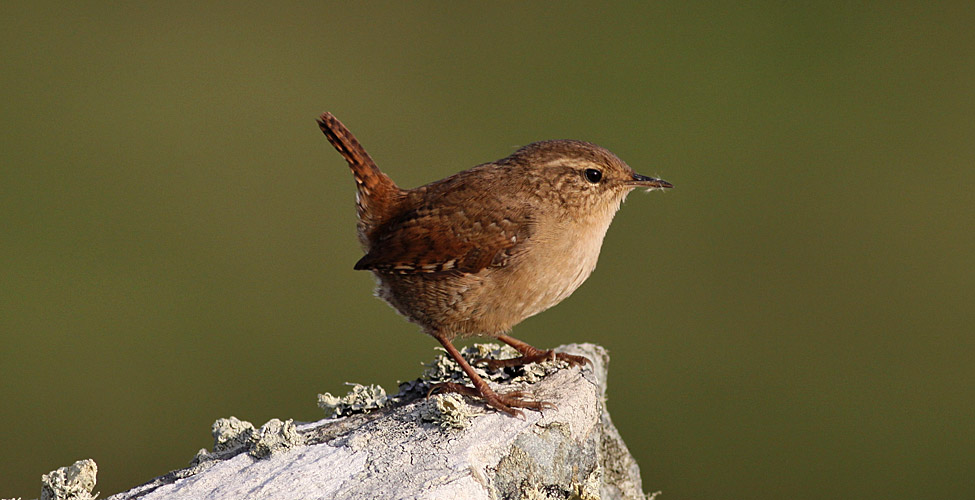
Middle image-The Wren.
Bottom image-The Robin.

Thursday, May 5, 2011

Black Aggie.


I thought that this little story might entertain you. Enjoy. I will return to Folklore of the Hedgerow on the next post.

Black Aggie.

When Felix Agnus put up the life-sized shrouded bronze statue of a grieving angel, seated on a pedestal, in the Agnus family plot in the Druid Ridge Cemetery, he had no idea what he had started. The statue was a rather eerie figure by day, frozen in a moment of grief and terrible pain. At night, the figure was almost unbelievably creepy; the shroud over its head obscuring the face until you were up close to it. There was a living air about the grieving angel, as if its arms could really reach out and grab you if you weren’t careful.

It didn’t take long for rumours to sweep through the town and surrounding countryside. They said that the statue – nicknamed Black Aggie – was haunted by the spirit of a mistreated wife who lay beneath her feet. The statue’s eyes would glow red at the stroke of midnight, and any living person who returned the statues gaze would instantly be struck blind. Any pregnant woman who passed through her shadow would miscarry. If you sat on her lap at night, the statue would come to life and crush you to death in her dark embrace. If you spoke Black Aggie’s name three times at midnight in front of a dark mirror, the evil angel would appear and pull you down to hell. They also said that spirits of the dead would rise from their graves on dark nights to gather around the statue at night.

People began visiting the cemetery just to see the statue, and it was then that a secret society decided to make the statue of Grief part of their initiation rites. “Black Aggie” sitting, where candidates for membership had to spend the night crouched beneath the statue with their backs to the grave of General Agnus, became very popular.

One dark night, two society members accompanied a new hopeful to the cemetery and watched while he took his place underneath the creepy statue. The clouds had obscured the moon that night, and the whole area surrounding the dark statue was filled with a sense of anger and malice. It felt as if a storm were brewing in that part of the cemetery, and they noticed that gray shadows seemed to be clustering around the body of the frightened society candidate crouching in front of the statue.

What had been a funny initiation rite suddenly took on an air of danger.

One of the society brothers stepped forward in alarm to call out to the initiate. As he did, the statue above the boy stirred ominously. The two society brothers froze in shock as the shrouded head turned toward the new candidate. They saw the gleam of glowing red eyes beneath the concealing hood as the statue’s arms reached out toward the cowering boy.

With shouts of alarm, the society brothers leapt forward to rescue the new initiate. But it was too late. The initiate gave one horrified yell, and then his body disappeared into the embrace of the dark angel. The society brothers skidded to a halt as the statue thoughtfully rested its glowing eyes upon them. With gasps of terror, the boys fled from the cemetery before the statue could grab them too.

Hearing the screams, a night watchman hurried to the Agnus plot. He was extremely distressed to discover the body of a young man lying at the foot of the statue. The young man had apparently died of fright.

The disruption caused by the statue grew so acute that the Agnus family finally donated it to the Smithsonian museum in Washington D.C.. The grieving angel sat for many years in storage there, never again to plague the citizens visiting the Druid Hill Park Cemetery.

Is it true? I will leave it up to you to decide.

Folklore of the Hedgerow. Part Sixteen.


Folklore of the Hedgerow. Part Sixteen.

Blackbird. Lon Dubh.

Place blackbird feathers under someone's pillow and they will tell you their innermost secrets. Blackbirds symbolize reincarnation. Blackbirds are linked to the element of Water.

Two blackbirds seen together mean good luck. The sight of two together is unusual as they are quite territorial. If they nest near your house you will be lucky throughout the year and will experience good fortune. They are also regarded as messengers of the dead.

Blackbirds make their nests in trees from moss, grass and hair. A European tradition says that if human hair is used, the unfortunate unknowing donor will continue to suffer from headaches and possibly even boils and skin complaints until the nest is destroyed, so old hair should be disposed of carefully.

The beautiful song of the blackbird makes it a symbol of temptations, especially sexual ones. The devil once took on the shape of a blackbird and flew into St Benedict's face, thereby causing him to be troubled by an intense desire for a beautiful girl he had once seen. In order to save himself, the saint tore off his clothes and jumped into a thorn bush. This painful act is said to have freed him from sexual temptations for the rest of his life. Now if you believe that you’ll believe anything.

Like the crow and the raven, the blackbird is often considered a bad omen. Dreaming of a blackbird may be a sign of misfortune for you in the coming weeks. It also means you lack motivation and that you are not utilising your full potential.

Dreaming of a flying blackbird is said to bring good fortune.

One story concerning the blackbird is about St.Kevin, an Irish 7th century Saint who loved wildlife. It is said that in the temple of the rock at Glendalough, St.Kevin was praying with his hand outstretched upwards when a blackbird flew down and laid her eggs in his palm. The story goes on to say that the saint remained still for as long as it took for the eggs to hatch and the brood to fly the nest.

Among the Celts the blackbird is thought to be one of the three oldest animals in the world. The other two being the trout and the stag. They are said to represent the water, air and earth.

Legend says that the birds of Rhiannon are three blackbirds, which sit and sing in the World Tree of the Otherworlds. Their singing puts the listener in to a sleep or trance which enables her/him to go to the Otherworlds. It was said to impart mystic secrets.
In Irela
nd in the nineteenth century, blackbirds were supposed to hold the souls of those in purgatory until judgement day. It was said that whenever the birds voices were particularly shrill, it was those souls, parched and burning, calling for rain. The rain always followed.

The whistle of the blackbird at dawn warned of rain and mist for the coming day.

Bottom in a Midsummer’s dream sings;
“The ouzel cock so black of hue
With orange tawny bill…”
(Ouzel being an old name for blackbird.)

The Dunnock. Bráthair an Dreoilín.

Known more popularly as the “Irish Nightingale,” the dunnock is the object of a most tender superstition. By day it is a happy little bird that tries to outdo every other bird with its song. However, at night particularly at midnight their sad and tender songs are said to reflect the cries of unbaptised babies that have returned from the spirit world in search of their parents.

The dunnock’s blue-green eggs were regarded as charms against witches spells when strung out along the hob. They were especially good for keeping witches and spirits from coming down the chimney.

It was in fact Linnaeus who gave the Dunnock the name Accentor which means ‘one who sings with another’. Chaucer made notes on how the cuckoo uses the dunnock to rear its young. Cuckoos which use dunnocks in this way can imitate the colour of the dunnock eggs whereas other cuckoos which may use another species of bird, say a meadow pipit, will imitate the colour of the meadow pipit eggs. Chaucer refers to the Dunnock as Hegesugge which means ‘flutterer in the hedges’. Hegesugge is the Old English name for Dunnock/Hedge Sparrow.

The Thrush. Smólach.

There are many superstitions associated with Song thrushes, including the notion that they dispose of their old legs and acquire new ones when they are about 10 years old. Another superstition is that they are believed to be deaf. All sorts of things have also been said and written about Mistle thrushes also. In the fourth century Aristotle was already writing about its fondness for mistletoe and there is an old belief that Mistle thrushes could speak seven languages!

In Ireland it was believed that the faeries made sure that the thrush built its nest low down near the fairies home in the grass so that they could enjoy the birds song. If the thrush built its nest high up in a thorn-bush it was a sure sign that the faeries were unhappy and misfortune would come to the neighbourhood.

It was believed that the flesh of the song thrush would cure sickness and convulsions.

That’s the wise thrush;
he sings each song
twice over,
Lest you think he
never could recapture
The first fine careless rapture!

Extract from Home-Thoughts, From Abroad by Robert Browning

Top image: The Song Thrush.
Middle image: The Dunnock.
Bottom image: The Blackbird.

Wednesday, May 4, 2011

Folklore of the Hedgerow. Part Fifteen.


Folklore of the Hedgerow. Part Fifteen.

Bumblebee. Bumbóg.

Buff-Tailed Bumblebee nests can be found in the hedgerows. The bees may be seen coming and going through a hole in the ground. The nest will be hard to see as bees are very private individuals but if you listen carefully you may hear them buzzing away quite happily. Sometimes the Queen may decide to occupy an old abandoned mouse nest as these are usually warm and well insulated. She may also nest underneath sheds, decking, in compost bags, in hedge clippings or even in attics or under floor boards. You could move a nest if it was causing you problems but it may not fully recover therefore leave it alone if it is doing you no harm. Like all bumblebees, they need to be greatly provoked before they sting.

As bees are becoming victim to an ever changing world that threatens their habitat you can do your bit to help them survive. Plant suitable flowers in your garden, window boxes, containers or even along the hedgerow. Provide a nest box, these are now becoming increasingly available in any good garden centre or make your own, they are very easy and you can Google plans. Remember they are a gardener’s friend and we need bees to pollinate our plants.

There is a superstition that if a bumblebee buzzes at the window it is a sign of a coming visitor.
A servant girl was standing at the kitchen window, in flew a bumblebee ‘Oh!’ she said, ‘a visitor is coming! Has the bee got a red tail or white? Red for a man and white for a lady’.

Irish folklore tells us how easily the bees take offence and this will cause them to cease producing honey, desert their hives and die. You must treat them as you would a member of your own family. They must be told all the news, in particular births, deaths and marriages. In the event of a death their hive must be adorned with a black cloth or ribbon and they must be given their share of the funeral food. You may then hear them gently hum in contentment and they will stay with you.

Other beliefs were that if the bees heard you quarrelling or swearing they would leave so you must talk to them in a gentle manner. They cannot tolerate the presence of a woman of loose morals or one that was menstruating but would sting her and drive her away (sounds like Christian influence here). You must never buy bees with normal money, only with gold coin although you may obtain them through gift, loan or barter. It was also believed that if a single bee entered your house it was a sign of good luck on the way, usually in the form of wealth.

When bees swarmed, it was the women and children of the household that had to follow them, making a noise with pots and pans. This was supposed to make them settle or maybe it was really just to warn people to get out of the way? It was accepted that in these circumstances you could follow them onto someone else’s land without being accused of trespassing.

The law on bees (Brehon Law) was that bees taking nectar from plants growing on your neighbours land were guilty of 'grazing trespass' in the same way a cow or sheep would be if they were on your neighbours land. They could even be accused of 'leaping trespass' in the same way as poultry. The way this law was observed was that a beekeeper was allowed three years of freedom during which time the bees were allowed free reign, on the fourth year the first swarm to issue from the hive had to be given to your neighbour as payment. On the following years other swarms were given in turn to other neighbours, in this way everyone was happy. From all accounts it seemed to work. Another issue the Bechbretha (Law governing bees) was enacted was in the event of stings. As long as you swore you had not retaliated by killing the bee you would be entitled to a meal of honey from the bee keeper. However if the unfortunate person died from a sting then two hives had to be paid in compensation to their family.

It was a bad omen if a swarm settled on a dead branch for it meant death for someone in the bee keeper’s family or for the person who witnessed the swarm settling. Popular folklore also suggested that bee stings aide in the relief of arthritis and rheumatism in much the same way as nettle stings and recently bee venom has been revived as a possible treatment for multiple sclerosis.

In Celtic myth, bees were regarded as beings of great wisdom and as spirit messengers between worlds. Honey was treated as a magical substance and used in many rituals. It was made into mead and was considered to have prophetic powers and it may have been this that was called ‘nectar of the gods’. The rivers that lead to the summer lands are said to be rivers of mead.

“Telling the Bees” was extremely important, whether good news or bad or just everyday gossip. As stated earlier you had to tell the bees about a death in the family or the bees would die too. Bad news was given before sunrise of the following day for all to be well. You may even formally invite the bees to attend the funeral or you could turn the beehives round as the coffin was carried out of the house and past the hives. In ancient European folklore, bees were regarded as messengers of the gods and so the custom of “Telling the Bees” may be a throwback to the idea of keeping the gods informed of human affairs.

Trembling, I listened: The summer sun
Had the chill of snow;
For I knew she was telling the bees of one
Gone on the journey we must all go!
And the song she was singing ever since
In my ear sounds on:
‘Stay at home, pretty bees, fly not hence!
Mistress Mary is dead and gone!

Extract from “Telling the Bees” by John Greenleaf Whittier.

Monday, May 2, 2011

Folklore of the Hedgerow. Part Fourteen.


Folklore of the Hedgerow. Part Fourteen.

The Cow Parsley. Peirsil Bhó

(Wild Chervil, Hedge Parsley, Keck, Wild Beaked Parsley, Devil’s Parsley, Queen Anne’s lace, Mothers dies)

'Neath billowing skies that scatter and amass.
All round our nest, far as the eye can pass,
Are golden kingcup-fields with silver edge
where the cow-parsley skirts the hawthorn-hedge.
'Tis visible silence, still as the hour-glass.


Dante Gabriel Rossetti, (1828-1882).

Also known as Devil's Parsley, possibly because of its resemblance to the highly poisonous Hemlock, this plant occurs in accounts of witchcraft practices. It is a native plant belonging to the Apiaceae family.

The name Queen Anne's lace: from time when Queen Anne travelled the country side in May, around Kensington in England, as she suffered from asthma, & came to get fresh air. The roadsides were said to have been decorated for her by this plant. As she & the ladies in waiting walked, they carried lace pillows; the Cow Parsley resembled the lace.

The origin of the name Mothers Dies seems to be a folk tale that children were told that if they picked cow parsley, their mother would die. This threat would deter children who couldn't tell the difference from picking hemlock which is poisonous.
The Celts used to include Cow Parsley in their diet according to archaeologists who analysed the stomach contents of a Celtic man discovered in a peat bog in Cheshire. They also found Emmer and Spelt wheat, Barley, fat hen and dock.

While some claim that the root of the wild plant is also edible, it is not advisable to eat any part of this plant unless it has been expertly identified. There are several plants that look the same as Cow Parsley and are extremely poisonous and potentially fatal if ingested. DO NOT EAT THIS PLANT Remember Cow parsley can be easily confused with Hemlock.

Cow parsley is said to get rid of stones and gravel in the gall bladder and kidneys but very little research has been done on the common plant. It has been used by amateur dyers as a beautiful green dye; however, it is not permanent. The most common use for the stalks is for pea-shooters as the stems are hollow, so children love them. The foliage used to be sold by florists in Victorian times and used in flower arrangements.

Like sweet woodruff, cow parsley has the reputation of “breaking your mother’s heart”. This is said to have come about because the tiny white blossoms drop quickly. In the days before vacuum cleaners, the temptation for mothers to ban these work-generating posies from the house was understandable. This may be where the superstition came from describing Cow Parsley as ‘unlucky indoors’ and a ‘harbinger of death’.

The cultivated relative of Cow Parsley, Chervil, is a well known herb which when made into an infusion can be used in the treatment of water retention, stomach upsets and skin problems. It can be used to promote wound healing. Chervil water is used as a constituent of gripe water. Cow Parsley may be used as a natural mosquito repellent when applied to the skin.


The Nettle. Neanntóg


In our folklore there are many uses for Nettle.

'To cure a sting of a nettle, place a dock leaf over sore part for a few minutes and it will be well'

'The water of boiled nettles if drank will cure anyone suffering from worms'
'Cure for dropsy.

'It is said if a person went to a graveyard and plucked a bunch of nettles that would be growing there and boiled them and give the water to drink to a person that had dropsy if would cure him'

'For rheumatics a bed strewn with nettles'

'3 doses of nettles in the month of April will prevent any disease for the rest of the year'

All the above are from the National Folklore Collection, University College Dublin.

17th century herbalist and apothecary, Nicholas Culpeper is reputed to have said:
'Nettles may be found by feeling for them in the darkest night'.

They are recognised as being a rich source of vitamin C and contain more iron than spinach. Indeed they make a very tasty soup but it is essential to pick them where no chemicals or pollution may have affected them and to use only the upper leaves as the lower leaves may contain irritants. Nettles also contain anti-histamines which are helpful to those with allergies and serotonin which is reputed to aid one's feeling of 'well-being'.

Arthritic joints were sometimes treated by whipping the joint with a branch of stinging nettles. The theory was that it stimulated the adrenals and thus reduced swelling and pain in the joint.

Nettles are reputed to enhance fertility in men, and fever could be dispelled by plucking a nettle up by its roots while reciting the names of the sick man and his family.

Turkey and other poultry (as well as cows and pigs) are said to thrive on nettles, and ground dried nettle in chicken feed will increase egg production.

Nettles left to rot down in water make a fantastic liquid fertiliser.

Nettle can alter the menstrual cycle and may contribute to miscarriage, pregnant women should not use nettle.

Stinging nettle may affect the blood's ability to clot, and could interfere with blood-thinning drugs.

Stinging nettle may lower blood pressure.

Stinging nettle can act as a diuretic, so it can increase the effects of certain drugs, raising the risk of dehydration.

Stinging nettle may lower blood sugar, so it could make the effects of certain drugs stronger, raising the risk of hypoglycaemia (low blood sugar). Diabetics beware.

The Nettle is significant among plants used for medicine by the Celts in that it was probably one of the most widely used due to its ability to prevent haemorrhaging and stop bleeding from wounds. They would have used it to treat the wounds their warriors received in battle.

Recently it has been found that lectin found in Nettles is useful in treating Prostate enlargement and is widely prescribed for this in our times.

Nettles also have a place in ancient Celtic folklore and were also known as "Devil's Claw".

Nettles were believed to indicate the living place of fairies, and their stings protected one from witchcraft or sorcery.

The Primrose. Sabhaircín.

'Guard the house with a string of primroses on the first three days of May. The fairies are said not to be able to pass over or under this string.'
From the National Folklore Collection, University College Dublin. NFC S.455:237. From Co Kerry.

The symbol of safety and protection, in ancient times it was placed on the doorstep to encourage the fairy folk to bless the house and anyone living in it, and it was also said that if you ate the blooms of the primrose you would see a fairy. 
Both the cowslip and the primrose were thought to hold the keys to heaven and so were considered to be very sacred by the Celtic people.

It was the flower of Love and bringer of good luck, and was the symbol of the first day of spring and so was laid across thresholds to welcome ''May Day''. 
Also considered to be a bringer of great inspiration for poets, the flower of youth, birth, sweetness and tenderness.

Insects, in particular ants, play an important role in pollinating these flowers. Nectar is located at the bottom of the flower tube and the long thin body of the ant is perfectly designed to carry and deliver pollen from other primrose plants. The primrose family is also remarkable for the number of hybrids it produces.

The primrose has many medicinal uses and was important in the past as a remedy for muscular rheumatism, paralysis and gout. The leaves and flowers can be used either fresh or dried; the roots should be dried before use. Culpepper was aware of the healing properties of the Primrose and said, “Of the leaves of Primrose is made as fine a salve to heal wounds as any I know.”

The Primrose was highly-prized by the Celtic Druids and its abundance in woods, hedgerows and pastures made it an easily-collectible plant. Primroses were often carried by the Druids during certain celtic rituals as a protection from evil. The fragrant oil of the flower was also used by the Druids to anoint their bodies prior to specific rites in order that they might be cleansed and purified.

In the middle ages they were used to treat gout and rheumatism and an infusion of the roots was used to treat headaches.

Primroses are loved by the faeries so if you grow them don’t let them die for if you do you will greatly offend the faeries and who knows what will happen.

Primroses were very important in the rural area especially during the butter making season that began in May. In order to encourage cows to produce a lot of milk, primroses were rubbed on their udders at Bealtaine. Primroses would also be scattered on the doorstep to protect the butter from the faeries.

Primroses were also associated with chickens and egg laying and it was considered unlucky to bring primroses indoors if the hens were hatching in the coop dresser.

It was said that primroses bloomed in Tír na nóg and that people returning from there always brought a bunch with them as proof that they had been there.

In Irish folklore it was believed that rubbing a toothache with a primrose leaf for two minutes would relieve the pain. It was also used as a cure for jaundice (yellow flower).

The flower was often used in medicine throughout the ages as it has similar properties to aspirin, it has always been known as a ''healing'' plant, and so was often used extensively 
in foods. Even today it is known for its healing properties and is used as a healing tea, while in the world of the flower essence, it is said to help heal those who have experienced the loss of a mother figure as a child.

In Ireland an ointment would be made from certain herbs including primrose and pigs lard and this would be used on burns.

DO NOT PICK AND USE HERBS UNLESS YOU KNOW EXACTLY WHAT YOU ARE DOING.

Sunday, May 1, 2011

Those born in the month of May.


Tree zodiac for May.

Willow - The Observer.
April 15 – May 12.


If you are born under this sign then you are ruled by the moon. You are creative and highly psychic, intelligent and in tune with the ever changing seasons. You have an ability to retain knowledge and a good memory for facts which you will be able to use to great effect. You are patient and full of potential but you do tend to hold back a little for fear of appearing a bit pushy. You are also very articulate, strong willed, resourceful and a bit of a puzzle. You also have a tendency to be emotional and are capable of sudden mood changes, but trust your inner voice for you have good intuition.

The "new moon" Willow individual tends to more inclined to sudden mood changes and displays more unreliable character traits. These people are however receptive to change and quick to take advantage of any opportunity which presents itself. The "full moon" Willow individual tends to disregard advice, even though his or her own reasoning power often lacks credibility. The "full moon" Willow is, however, the more resourceful of the two types and is blessed with an even more exceptional memory than his or her "new moon" counterpart.

Being shrewd and practical, they can be brilliant inventors but are also drawn to the unexplained mysteries of life. As a friend, the Willow individual can be a powerful ally...on the other hand; he or she can make for a formidable enemy. Willows have a type of passive tenacity and can be extraordinarily wise counsellors and extremely nurturing parents who are protective of loved ones.

The Willow person is often reluctant to forgive and forget which can lead to permanent rifts with friends and family. In the work force, Willows are usually employed in very responsible positions but find it hard to settle upon a definitive career. If the career choice should be in the field of education, however, they are counted among the best teachers.

They are possessed with an overactive imagination and tend to fret needlessly about health matters. The Willow has a deep interest in family loyalty and history and usually becomes the family genealogist. The figure of the mother tends to dominate and influence the Willow throughout his or her life but once, married, there is no more devoted individual when it comes to the spouse and children.

The willow symbolises the female and is sacred to the moon, in Celtic mythology the universe was hatched from two serpent’s eggs which contained the sun and the moon and were hidden within the branches of the willow. Hen’s eggs were later substituted for those of the serpent and eaten as part of the Bealtaine feast. This was later transferred to Easter by the Christians and the eggs became known as Easter eggs.


Hawthorn - The Illusionist.
May 13 – June 9


People born under this sign are not always what they first appear to be. They appear to be one thing on the outside and another on the inside and the old saying “never judge a book by its cover” never seemed so true. When you first see them you would never suspect the fiery passion and creative juices that flow through their veins. They are very well adjusted and adaptable to most of what life throws at them so they are quite content with their lot and have the ability to comfort others at the same time.

They are curious and interested in a wide variety of subjects. They are also great listeners and people will seek them out in order to gain some release from their troubles. Hawthorn people have a great sense of humour and understand the concept of irony, are able to stand back and see the bigger picture with clear insight.

They can be bored very easily and need mental stimulation and a challenge. Multi talented they can take advantage of any opportunity that presents itself and excel as performers with great communication skills and the ability to influence others. They are known for their honesty and sincerity and are very understanding of others and for these reasons they make solid friends.

They do however, have a volatile temper and are prone to outbursts of anger. They are also very good at planning and scheming so they make excellent leaders and can take advantage of their knowledge regarding the weaknesses of their opponents although they are not ruthless, merely very clever strategist.

Hawthorn people make wonderful parents who cannot be hoodwinked by their children and because they are always looking for new and exciting things to do they are full of an ageless and childlike quality that will stand them in good stead.

Remember this is just for a bit of craic and not to be taken too seriously as each person may display different traits.

Folklore of the Hedgerow. Part Thirteen.


Folklore of the Hedgerow. Part Thirteen.

Some of the plants you will find in an Irish hedgerow include:

Bluebell. Coinnle Corra.

Constancy and everlasting love.

Believed to call the fairies when rung, and thought to be unlucky to walk through a mass of bluebells, because it was full of spells. It is also considered an unlucky flower to pick or bring into the house. The Latin name for this flower is Endymion who was the lover of the moon Goddess, Selene. The goddess put Endymion into an eternal sleep, so she alone could enjoy his beauty.

Bluebells were said by herbalists to help prevent nightmares, and used as a remedy against leprosy, spider-bites and tuberculosis, but the bluebell is poisonous.

Noted for the gummy sap from its bulbs, which made it useful as a starch substitute. It was also used as glue for bookbinding (as it is so toxic it stops certain insects from attacking the binding) and setting the tail feathers on arrows.

The bulbs are extremely toxic and this toxicity may be the origin of the superstitious belief that anyone who wanders into a ring of bluebells will fall under fairy enchantment and soon after die. Other tales come from a time when forests where forbidding places, people believed that the bells rang out to summon fairies to their gatherings, unfortunately any human who heard a bluebell ring would soon die.

However, not all the Bluebell’s folklore is quite so gloomy. Some believed that by wearing a wreath made of the flowers, the wearer would be compelled to speak only truth. Others believed that if you could turn one of the flowers inside out without tearing it, you would eventually win the one you love.

Where Bluebells are found in hedgerows it may indicate an ancient hedge as their presence is indicative of ancient woodland.


Foxglove. Lus Mór.

Insincerity.

The name derives from the shape of the flowers resembling the fingers of a glove - 'folk’s glove' meaning belonging to the fairy folk. Folklore tells that bad fairies gave the flowers to the fox to put on his feet to soften his steps whilst hunting.

The whole foxglove plant is extremely poisonous, but provides a source of digitalis used by doctors in heart medicine. The foxglove was believed to keep evil at bay if grown in the garden, but it was considered unlucky to bring the blooms inside. The commonest colour for the foxglove is pink, but you often see white blooms in the hedgerows.

In Irish folklore it was said that if a child was wasting away then it was under the influence of the fairies (fairy stroke) and foxglove was given to counteract this (it was known to revive people). One such remedy was the juice of twelve leaves taken daily. It could also work for adults, such a person would be given a drink made from the leaves, if they were not too far gone they would drink it and get sick but then recover. However, if they were completely under the spell of the faeries then they would refuse to drink.

An amulet of foxglove could also cure the urge to keep travelling that resulted when you stepped onto the fairy grass, the’ stray sod’ or fód seachrán. In Ireland it is believed that the foxglove will nod its head if one of the ‘gentry’ passes by.

Bramble/Blackberry. Dris.

Alternative name for Blackberries is Sméara Dubha.

Not to be eaten after Samhain because the Púca spits on them and they become inedible (in some parts of Ireland they believe that the Púca urinates on them).

An arch of bramble which had rooted at both ends was believed to have special powers and if you wished to invoke evil spirits you could do so by crawling through the arch at Samhain while making your wish. An arch of bramble could also be used to cure, for example, a child with whooping cough could be cured by passing it under the arch three times before breakfast for nine consecutive days while saying “in bramble, out cough, here I leave the whooping cough".

In Ireland if you found a piece of bramble attached to a cows tail at Bealtaine it was considered suspicious as it meant someone was trying to put a spell on the milk.

In Ireland the flower of the Blackberry was a symbol of beauty to the Gaelic poets, and a well-known love ballad name Bláth na Sméarhas the , or ‘Flower of the Blackberry’.

Bramble was classed as one of the bushes of the wood in the Old Irish Brehon Laws on trees and shrubs and you could be fined for cutting it.

Blackberries were traditionally eaten mashed up with oatmeal to make a tasty porridge and for making jam. The roots were used to make an orange dye; In Ireland the root of the bramble was used to make the core for hurling balls and for pipes and the long shoots were used for wickerwork and even for securing thatch.

Medical uses include using the leaves in a cure for diarrhoea in both cattle and people; it could cure dropsy and was considered to have fantastic curative powers for coughs and colds. It was also used for a variety of skin complaints such as scalds, burns, boils, shingles and spots.