Thursday, December 23, 2010

Winter solstice and plants of this time of year.


Winter Solstice.

Solstice literally means 'Sun Stands Still', for a few days around the time of the winter solstice the sun appears to stand still in the sky in that its elevation at noon does not seem to change. The winter solstice date is normally considered to be the 21st of December in the northern hemisphere, however at the winter solstice the position of the sun remains the same for three days. No one's really sure how long ago humans recognized the winter solstice and began heralding it as a turning point -- the day that marks the return of the sun.

Many cultures the world over perform solstice ceremonies. At their root, an ancient fear that the failing light would never return unless humans intervened with magical ceremonies.

Yule is the day of the winter solstice, the one of the longest night. This solar festival falls close to Christmas. As the Christians converted the Pagans, they adopted many of the country dwellers’ traditions to facilitate the acceptance of Christianity. The Celtic and Germanic/Nordic traditions are the biggest influence of Pagan plants on Christmas traditions. Some of the plants associated with this time of year are:

Holly.


Holly berries, cloaked in sharp green leaves, are brightest in winter. The Druids revered this plant as sacred. It has been associated with winter magic and believed to repel evil. The Celts of the British Isles and Gaul believed the Holly King ruled over winter and death.

In Scandinavian mythology, the holly belonged to Thor & Freya. The plant’s association with Thor's lightning meant that it could protect people from being struck by his bolts.

Norsemen and Celts would plant a holly tree near their homes to ward off lightning strikes. The crooked lines of the holly leaves most likely gave rise to its association with lightning, as well as the fact that holly conducts lightning into the ground better than most trees.

Ivy.


Ivy is an evergreen vine symbolizing immortality. It had been a symbol of eternal life in many pagan religions, including Druidism. The Christians who converted these Pagans embraced it as a symbol for the new promise of eternal life.

Mistletoe.

Mistletoe is another plant that is sacred to the Celts and the Germanic/Norse. They believed the plant enhanced fertility because it stayed green in the winters.

The Druids believed the mistletoe's magical properties extended beyond fertility. It was believed to cure almost any disease and was known as the all healer.

Sprigs fixed above doorways of homes were said to keep away lightning and other types of evil. Because the plant has no roots it was believed that it grew from heaven.

Druid priests, five days after the New Moon of Yule, would cut mistletoe from the sacred oak with a sickle made of gold. The branches were divided into sprigs and given to people to hang over their doorways for protection. Mistletoe was placed in baby cradles to protect them from faeries.


The Mistletoe Magic :

From the earliest times mistletoe has been one of the most magical, mysterious, and sacred plants of European folklore. It was considered to bestow life and fertility; a protection against poison; and an aphrodisiac. The mistletoe of the sacred oak was especially sacred to the ancient Celtic Druids. On the sixth night of the moon white-robed Druid priests would cut the oak mistletoe with a golden sickle. Two white bulls would be sacrificed amid prayers that the recipients of the mistletoe would prosper. Later, the ritual of cutting the mistletoe from the oak came to symbolize the emasculation of the old King by his successor.

Mistletoe was long regarded as both a sexual symbol and the "soul" of the oak. It was gathered at both mid-summer and winter solstices, and the custom of using mistletoe to decorate houses at Christmas is a survival of the Druid and other pre-Christian traditions.

The Greeks also thought that it had mystical powers and down through the centuries it became associated with many folklore customs. In the Middle Ages and later, branches of mistletoe were hung from ceilings to ward off evil spirits. In Europe they were placed over house and stable doors to prevent the entrance of witches. It was also believed that the oak mistletoe could extinguish fire. This was associated with an earlier belief that the mistletoe itself could come to the tree during a flash of lightning. The traditions which began with the European mistletoe were transferred to the similar American plant with the process of immigration and settlement.

Kissing under the mistletoe:

Kissing under the mistletoe is first found associated with the Greek/Roman festival of Saturnalia and later with primitive marriage rites. They probably originated from two beliefs. One belief was that it has power to bestow fertility. It was also believed that the mistletoe also possessed "life-giving" power.

In Scandinavia, mistletoe was considered a plant of peace, under which enemies could declare a truce or warring spouses kiss and make-up. Later, the eighteenth-century English credited it with a certain magical appeal and called a bunch of mistletoe 'a kissing ball'. At Christmas time a young lady standing under a ball of mistletoe, brightly trimmed with evergreens, ribbons, and ornaments, cannot refuse to be kissed. Such a kiss could mean deep romance or lasting friendship and goodwill. If the girl remained unkissed, she cannot expect not to marry the following year. In some parts of England the Christmas mistletoe is burned on the twelfth night lest all the boys and girls who have kissed under it never marry.

Whether we believe it or not, it always makes for fun and frolic at Christmas celebrations. Even if the pagan significance has been long forgotten, the custom of exchanging a kiss under the mistletoe can still be found in many European countries. Now if a couple in love exchanges a kiss under the mistletoe, it is interpreted as a promise to marry, as well as a prediction of happiness and long life. In France, the custom linked to mistletoe was reserved for New Year's Day: "Au gui l'An neuf" (Mistletoe for the New Year). Today, kisses can be exchanged under the mistletoe any time during the holiday season.

The Legend:


For its supposedly mystical power mistletoe has long been at the centre of the folklore tales of many countries. One such tale is associated with the Goddess Frigga. The story goes that Mistletoe was the sacred plant of Frigga, goddess of love and the mother of Balder, the god of the summer sun. Balder had a dream of death which greatly alarmed his mother, for should he die, all life on earth would end.

In an attempt to keep this from happening, Frigga went at once to air, fire, water, earth, and every animal and plant seeking a promise that no harm would come to her son. Balder now could not be hurt by anything on earth or under the earth. However, Balder had one enemy, Loki, god of evil and he knew of one plant that Frigga had overlooked in her quest to keep her son safe. It grew neither on the earth nor under the earth, but on apple and oak trees. It was lowly mistletoe.

Loki made an arrow tip of the mistletoe, gave to the blind god of winter, Hoder, who shot it , striking Balder dead. The sky paled and all things in earth and heaven wept for the sun god. For three days each element tried to bring Balder back to life. He was finally restored by Frigga, the goddess and his mother.

It is said the tears she shed for her son turned into the pearly white berries on the mistletoe plant and in her joy Frigga kissed everyone who passed beneath the tree on which it grew. The story ends with a decree that whoever should stand under the humble mistletoe, no harm would befall them, but they should receive a kiss, a token of love. What could be more natural than to translate the spirit of this old myth into a way of thinking and accept the mistletoe as the emblem of that Love which conquers Death?

Happy Solstice. Happy Yule. Happy Xmas. To all.

Thursday, December 9, 2010

An Irish Xmas or Yule.


In the Irish language Christmas is called "Nollaig" which comes from the Latin "natalica" meaning birthday.

Irish Christmas history shows us some traditional rituals of Christmas in Ireland. Ritual here is used in a very broad sense, some have little religious significance, but great social importance. A lit candle in the window on Christmas Eve is one such custom. All Irish homes have a lit candle, which has the symbolism of showing the light to the stranger after dark. This is a most ancient custom when people were really hospitable. The candle has to be lit by the youngest in the family and extinguished by any girl named "Mary" although these days the youngest child can extinguish it. Candle lighting at this time can also be traced back to antiquity, to the time when ancient Romans lit candles at the midwinter festival to signify the return of the sun's light after the winter solstice.

The custom of a laden table is also an endearing one. The table is laid with bread filled with caraway seed and raisins and a large pitcher of milk and a candle. This means that any weary traveller or Joseph and Mary can avail of this hospitality if they so wanted and is an integral part of Irish Christmas History. Nowadays we place a glass of milk and a mince pie for Santa (no alcohol because he has to drive the sleigh) and a carrot for Rudolph. In the rural areas we have a tradition of white washing the stone cow house and other outhouses and having a big clean up around the place to get ready for visitors.

No Irish home would be complete without the holly. Holly with its glossy green leaves and festive red berries are perfect for holiday decorating. At Christmas in Ireland, holly was used to decorate the entire house. A spray was placed over the door as well as on the mantle, around picture frames, among the plates on the cupboard, as candle rings and in other areas of the home. Gifts of holly boughs were also given to neighbours. One charming folklore superstition was that the fairy folk would come in out of the cold to find shelter in the holly branches. To the Celtics holly represented both life and rebirth, the evergreen leaves symbolized life during a time when all else was bare and the red berries represented the coming of Spring.

Decorating trees was a tradition which actually began in Ireland and has carried over to many other cultures. In fact, decorating Christmas trees began as a pagan tradition. Various pagan cultures did this to signify the importance of the moon and the sun, and all aspects of the universe that they could see. The seasons were very important to pagan cultures, and Ireland was largely a pagan-dominated culture before Christianity came to it.

Of course now, decorating Christmas trees is a widespread custom. People all over the world do this at Christmas, but few realise the origins came from pagan traditions in Irish and Celtic cultures. The present day Christmas tree also goes back to the worship of sacred trees by various religions. The Druids worshipped the Rowan or the Oak tree, the Egyptians worshipped the palm tree and in Rome it was the fir tree. Gift giving took place, coloured lights were used to ward off evil spirits, and festive foods were eaten.

We decorate the house with ‘Christmas decorations’ about two weeks before the 25th and these days people even decorate trees in their gardens with lights. These decorations must be taken down no later than the 6th January or bad luck will ensue. This day is also known as ‘little Christmas’, on this day the mother of the house puts her feet up and is not allowed to do any work, it’s her day to be waited on by all the other members of the family.

We also tend to all the livestock making sure they have clean warm bedding, fresh water and food. Wildlife in the garden and around the area also require food and water and so we also tend to them. Whether you call it Yule or Christmas this time of year has a wonderful feel to it, it’s great walking around the town saying hello to everyone and having the craic, picking up the turkey or goose and all your supplies and then having a pint before making your way home. Don’t forget your neighbours, they may be lonely, cold or hungry and if you can spare a little something for those without then fair play to ye.

Christmas dinner with the family is a great time. We will have the children and grandchildren around, we will visit extended family on St. Stevens day and look forward to seeing friends over the festivities.

So on behalf of myself and my family I wish each and every one of you A Very Happy Healthy and Peaceful Yule/Christmas or as we say here Nollaig Shona Daoibh (when said to more than two people) or Nollaig Shona Duit (when said to one or two)

An Irish Christmas Blessing

The light of the Christmas star to you
The warmth of home and hearth to you
The cheer and good will of friends to you
The hope of a childlike heart to you
The joy of a thousand angels to you
The love of the Son and God's peace to you.

Wednesday, December 8, 2010

Gaoithe Sidhe. Fairy Wind.


Gaoithe Sidhe. Fairy wind.

This is a sudden gust of wind or a whirlwind that was thought to have been caused by the faeries. The wind was preceded by a loud humming noise, like thousands of bees, this was believed to have been caused by the passing of a fairy host, or there may have been a fairy host within the wind. Several Irish phrases describe it: sídh/sí gaoithe, sídh/sí chóra, gaoth sídhe/sí, séideán sídhe/sí.

The people in farming communities would cross themselves when they saw the wind coming, as they became afraid when they saw a column of hay rise at one end of the field while the wind at the other end of the field was perfectly still.

Sometimes it was thought that the wind was evidence that the fairies were helping with the farm labour. At other times the wind was thought to be the source of sudden illness. The wind could even rip the roof of a poor family’s house and let the faerie host in. It was also said to protect fairy treasure from thieves, it would silence mortal musicians playing fairy music and cause injury to humans or animals, especially the eyes.

The folk beliefs associated with whirlwinds and comparable gusts of wind.

Weather and atmospheric occurrences were of particular interest to the people who lived in the countryside, and they were not slow to give their own explanations for any unusual climatic manifestations especially in relation to whirlwinds which, in broad daylight, would suddenly raise coils of dust or carry away hayricks, straw or flax, through the air, sometimes as far as the neighbours’ fields.

These unusual whirlwinds played their part in weather forecasting. For some, if the whirlwind turned towards the southwest, they would say 'it was fetching rain’. According to others still, the sudden gust of wind that carried away wisps of hay or straw meant that the coming winter would be a hard one.

In Ireland, when a great wind was seen whirling everything into the air, it was often interpreted in terms of the fairies – that the fairy host was passing by, sometimes carrying mortals away with it. Indeed, almost any death, other than a gentle and gradual departure in old age, was open to interpretation as the work of the fairies. In the case of a young person’s death, people would talk about abduction by the fairies.

According to oral tradition ‘on Midsummer Eve, when the bonfires are lit on every hill in honour of St. John, the fairies are at their gayest, and sometimes steal away beautiful mortals to be their brides. They were also believed to be continually trying to abduct newborn children (usually males) to replenish their own fairy population, and to take young mothers into fairyland in order to suckle such abducted children.

As the fairies were thought to be very keen on music, it was said that they would also try to abduct mortals whose musical skills far exceeded theirs. Consequently, it was considered dangerous to find oneself in the path of a whirlwind. W.B. Yeats said that that fear was expressed in the attitude of the peasantry when they saw such whirlwinds: ‘They would take off their hats and say “God bless them!”

According to another Irish belief, there were known paths in the countryside through which the trooping fairies, an slua sí, were said to travel. It was thought wrong to obstruct these paths in any way. The story was told of a man who insisted on building his new house in a place considered a fairy path by the old people.

Although they warned him against doing it, he proceeded to build it, and then a mighty blast of a sidhe gaoithe knocked him down one night as he was holding a lighted torch. Assisted by the wind the thatch was ablaze within minutes and the dwelling was destroyed.

The fairies apparently also considered that the land, on which they dwelt, as well as what was growing on it, belonged to them. This was particularly the case around ring forts. They would thus raise a wind in order to claim their crop, according to the following story collected in County Limerick in 1940:

There was a man in this townland by the name of Jim Egan, and he died about thirty years ago. Well, one time in harvest he had a lot of mowing to do, and this night there was a full moon so he said he would break into another field of hay before he went to bed. So he started off mowing away in a meadow that had a fort in it, and after a while he noticed that six other mowers were after falling in behind him. He never saw them coming, but only heard the cutting behind him, and when he looked to see what it was, he saw the six men behind him and they all keeping time with his stroke.

So he cut away and they were making short work of the meadow until they came to a stream that was running through the middle of it. One of the men said to him that they could not cross the running water, but that he should jump across it himself and leave his scythe behind him. So he did that and he went home to bed.

When he got up in the morning, the meadow was all cut, and he and his family saved it. They had all the hay stacked in the field and he thought that everything was all right, but the next day a fairy wind rose up suddenly and swept most of the hay away. The fairies played their part in cutting the hay, so they decided to take it away with them too.

Some people who owned fields on ‘fairy land’ were thought to be luckier than others, and the fairy wind might even bring them prosperity. However, this was probably more a matter of chance than of real intention on the part of the fairies, as shown by the following anecdote. It comes from Monkstown, County Cork and was told by his grandfather to Sean Doyle, aged thirteen years at the time, and was recorded by him in the Irish Folklore Commission’s Schools’ Manuscript Collection, dating from 1937-8

The story was presented as referring to an actual happening:

This story happened about a century ago on a farm in Ballyfouloo.

An old woman who lived there at that time went picking sticks or furze as was her custom to boil the skillet. When she came to the corner of the field where a big hawthorn bush was growing, or as they called it at that time a ‘scarteen’ (Irish: scairtín, “a thorny bush’), her eyes stood in her head with fright, for almost on every thorn there was paper, as she thought, stuck.

On drawing closer she discovered that it was paper money; she was afraid to touch it because she said it surely belonged to the fairies. She ran home in haste. She told the neighbours about it, and, of course, the news spread like wild fire.

It eventually came to the ears of the farmer who owned the land. He, of course, went to the spot and claimed it as his, because it was found on his land. How the money got there is a mystery, but the old people say that the money was blown onto the bush by a ‘sheegee’ Irish: sí gaoithe, ‘whirlwind’.

However, these tales of the wind bringing good fortune were not so common. In general, the whirlwinds were dreaded, all the more because, as well as carrying souls, crops and even human beings away, they could also cause physical hurt to people. If a whirlwind arose suddenly, it was highly recommended to lie on the ground for its duration, as anyone who dared to remain in its path might suffer harm or facial deformity: (they said that if you were caught like that your mouth would become crooked and remain so).

In Ireland, it was again the fairies who were blamed for such afflictions. It was said that one should never look in the direction of a whirlwind, and people would speak about the ‘poc sí’, ‘fairy-stroke’ as resulting from their wind induced attacks. The ‘poc sí’ could take many forms. Any sudden fall or injury or any unexplained laming, deafness, loss of speech, fainting spell, distortion or swelling could be attributed to it, particularly if an unusual puff of wind had been observed about the time of the onset.

In Cork, young children were told that if they stood in the middle of it, they would not grow any more. However, tradition also provided people with the means of counteracting the supernatural powers of the beings thought to create whirlwinds – anybody had the power to exorcise such whirlwinds, as it is a well-known belief that supernatural beings hate iron, so one had only to throw an open knife – preferably a black-hafted one – or any other steel implement at them, to counteract their force.

In Ireland. If someone flung a fork at the whirlwind, moaning might be heard. This was considered proof enough that there was a being in it, and that is why, in order to avoid evil consequences, the person who threw the sharp tool was supposed to say at the same time: M’olc agus m’urchóid leat! (‘May my misfortune go with you’?)

Tuesday, December 7, 2010

Irish Highwaymen.


Captain Gallagher - Highwayman.

Captain Gallagher was one of the last wholesale robber captains in Ireland. Born in Bonniconlon he was reared by an aunt in Derryronane near Swinford. Captain Gallagher was a romantic figure in the same league as Robin Hood or Dick Turpin. He was a folk hero who was champion of the oppressed lower classes who suffered much injustice at the hands of the rich.

He and a small band of bandits operated with blunderbusses within an extensive area stretching from Bonniconlon to Swinford and including Attymass, Lough Talt and Foxford. Their deeds were bold and utterly fearless. Robberies were committed on the public roads and in open daylight; residences of the gentry were plundered almost nightly, and no place was considered safe unless strongly guarded.

He was such a notorious figure that his deeds are recalled in folk history throughout the region up to the present day. All of the accounts in folklore make reference to his generosity to the poor and his athletic ability in escaping from the Redcoats. Up to the present day people point out some of his famous hideouts, one in the Ox Mountains near Rooskey is referred to as “Leaba Rudaigh”.

Nearer to Swinford people will tell you he hid out in Ballylyra Wood close to the present day Knock International Airport. He is reputed to have had a residence on Glass Island, close to Pontoon (circa 1817-1818). Prior to his death there was a 500 guineas reward offered for his capture.

There is a story told of a shop in Foxford that was being robbed regularly and its owner could never find the culprit at work. Although he hired a guard to protect the property it was still being robbed almost nightly. Captain Gallagher offering his services to apprehend the thief, hid in a large chest in the corner of the shop. The guard arrived and it was not long before he began to pillage the store. When Gallagher got the chance he leapt out of the box and captured the guard who had been the thief all along.

On another occasion a woman was coming from the fair in Tubbercurry having sold her last cow in order to pay her rent to the local landlord. Nightfall was approaching as she passed through the Windy Gap near Lough Talt when she spotted a shadow in the distance. As they met, the person spoke and asked her where she was going in such a hurry. She replied that she was trying to reach home before dark in case Captain Gallagher robbed her. On hearing this the man smiled and gave her the price of the cow and the money with which to pay the rent. He told her to go away home and tell them that Captain Gallagher was not as bad a rogue as he was made out to be.

On another occasion Gallagher escaped through the window of a house as a party of military accompanied by a magistrate entered the front door. The daring captain, on reaching the ground, crept around to where the magistrate’s horse was fastened, and, loosening him, rode off at full speed, and the next day returned the animal, with his thanks, to the magistrate for the use of so good a beast at such a pinch.

Following narrow escapes Captain Gallagher was finally captured. His band had already been arrested near Westport but Gallagher managed to escape. There are many tales as to where he was actually captured, but much of the evidence seems to point to the small mountainside townland of Rooskey on the border of Attymass and Foxford.

According to local legend he was staying in a local house while recovering from an illness. He was given a meal, which had been laced with poteen, after which he fell asleep. The family then got to work and put him to bed in the “cailleach” bed beside the fire .His ankles and wrists were tied with flax ropes and a message was sent to the Redcoats in Foxford, who in turn alerted Ballina, Swinford and Castlebar. Captain Gallagher already bound was taken to Castlebar to be hanged after ‘a hasty, sham trial’.

Gallagher pleaded with his executioners and promised if spared he would lead them to his hidden treasure that was buried under a rock in Ballylyra Wood. His captors did not fall for this ploy however and went ahead with the execution. As soon as the nasty business of the day was finished they fled to Ballylyra in search of the hidden treasure but found that there were as many rocks in the wood as there are fish in the sea. After searching for three days all they found was a jewel-hilted sword. His buried gold is still supposed to be buried in the wood, seven foot from the river beside a tree.

His execution was reputedly the last public hanging to take place on the hanging tree opposite Daly’s Hotel on the Mall in Castlebar in 1818.

The following is an account of his execution taken from a late nineteenth century author:

He died fearfully. He and his ‘Secretary’ (Walsh) having shaken hands and kissed on the gallows, were flung off together. Walsh died at once, but Gallagher’s rope broke, and he was precipitated to the ground; he got a glass of wine, and was again shoved out on the trapboard by the executioner, seated like a tailor, his legs having been broken by the fall.

Irish Songs of Highwaymen.

Many of the most famous of the folk songs of Ireland deal with the less savoury members of society. Like Robin Hood in England, these gypsies and highwaymen have become folk heroes, immortalized in song. Three of the most famous of these songs are:

• Whiskey in the Jar
• The Newry Highwayman
• The Wild Rover

Whiskey in the Jar.

“Whiskey in the Jar” is easily one of the most famous folk songs of Ireland. It tells the tale of an unnamed highwayman who robs a military or government official (usually Captain Farrell, but other names are common). He brings the loot home to his sweetheart (usually Jenny, but sometimes Ginny or Molly) who betrays him to the law.

Although the exact date of its creation is unknown (its earliest printing was 1855), “Whiskey in the Jar” is easily over 300 years old. Alan Lomax, one of the most influential musicologists of the 20th Century, believed that “Whiskey in the Jar” partially inspired John Gay when he wrote “The Beggar’s Opera,’ written in 1728.

The use of the term “rapier,” a long, thin, sword used in the 16th and 17th Centuries dates the song to that era. “Rapier” could also refer to a “rapaire,” an Irish short spear used in that era by highwaymen and Jacobite sympathizers.

“Whiskey in the Jar” was also a popular tune in Colonial America due to its protagonist being an adversary of British officials. Similar to England and Ireland, Colonial Americans took pleasure in the exploits of some highwaymen, especially the ones who struck a Robin Hood-like pose by targeting wealthy land owners--something more common in song that in reality.

“Whiskey in the Jar” has been covered by such diverse musicians as:
• Jerry Garcia and David Grisman
• Thin Lizzy
• The Pogues
• Burl Ives
• Metallica
• The Limeliters

The Newry Highwayman (The Rambling Boy)

“The Newry Highwayman” is a far-travelled song that has taken on many different names over the years. The earliest printed version comes from 1830, but some versions of the song mention “Fielding’s Gang,” a reference to the Bow Street Runners-- London’s first police force, created in 1750.

“The Newry Highwayman” is about a young man from Newry, in Northern Ireland. At the age of 17 he gets married, and in order to keep his wife “both fine and gay” becomes a highwayman. He robbed his way successfully to London, where he is eventually taken and executed.

As mentioned above, “The Newry Highway” is a folk song that has taken many other names. Other names that it goes by are:
• The Rambling Boy
• Wild and Wicked Youth
• In Newry Town
• Newlyn Town
• The Flash Lad
• Adieu, Adieu

The Wild Rover

Although “The Wild Rover” is generally believed to be of Irish (or possibly Scottish) origin, this has recently come into dispute. There is German folk song with an identical tune as “The Wild Rover.” The question remains as to which came first.

Regardless of its origin, “The Wild Rover” has become an immensely popular drinking song around the world and especially in Ireland, ironic since that it was originally written as a temperance song.

Perhaps due to its popularity as a drinking song, “The Wild Rover” has been used, modified, and parodied countless times by football and rugby clubs. Many of the lyrics are not suitable for publication here.

Some other Irish folk songs involving rogues and highwaymen include:

• The Black Velvet Band
• The Wild Colonial Boy
• The Night Before Larry was Stretched
• Reilly’s Daughter
• Rakes of Mallow

Like many cultures, the Irish have their own songs about the rogue, the tramp, those from the other side of town. And like many, the Irish are not afraid to tip a few back to salute them.

Sunday, December 5, 2010

The Wren Boys.


The Wren Boy Tradition.

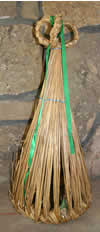
Irish tradition holds that the wren symbolizes the old year, while the robin symbolizes the year to come. To ensure that the passage from old year to new could take place, it was once common practice on St. Stephen's Day (December 26th) for a group of local boys to hunt and kill a wren.

This band of so-called Wren Boys, usually costumed and often masked, would then travel from house to house carrying the wren in a small box or casket (other sources say the wren was tied to a pole and decked with ribbons). They regaled each house with musical laments for the unfortunate bird along with pleas to raise money for the funeral.

This ancient tradition can still be seen in certain town and villages in Ireland and it really is a sight to behold! The Wren Boys march through the streets dressed in traditional attire (usually something made from straw) to the beat of drums and they stop off in bars along the way to play traditional music. Money is still collected but this is given to charity and of course a wren is not killed anymore but some Wren Boys march with a fake bird.

Although the Wren Boys are rarely seen today, they provide a historical thread to Ireland's past. Some sources say the wren is villified because it had betrayed Irish soldiers who were staging an attack on the invading Norsemen (who had been responsible for the destructions of some of the great monastic communities of early Christendom, such as the Abbey at Kells). Pecking at some bread crumbs left upon a drum, the wren betrayed the hiding place of the Irish and led to their defeat.

The same story is told about troops of Cromwell. When the Irish forces were about to catch Cromwell’s troops by surprise, a wren perched on one of the soldiers drums made a noise that woke the sleeping sentries just in time, thereby saving the camp.

Other myths hold that the wren betrayed St. Stephen himself with its chirping, leading to the first martyrdom of a Christian saint. Although the custom of sacrificing a wren is most commonly associated with Ireland, some form of the tradition actually exists throughout the Celtic world, with similar rites found in the Isle of Man, Wales, and France.

Other stories say the hostility towards this most harmless of creatures results from the efforts of clerics in the middle ages to undermine vestiges of druidic reverence and practices regarding the bird. Medieval texts interpret the etymology of wren, the Irish for which is dreolín, as derived from 'dreán' or 'draoi éan' the translation of which is 'druid bird'.

Clíona the seductress

One of the most interesting legends is that Cliona, a woman of the otherworld, seduced young men to follow her to the seashore. Here they drowned in the ocean into which she enticed them. Eventually a charm was discovered that, not only protected against her wiles, but could also bring about her destruction. Her only method of escape was to turn herself into a wren. As a punishment for her crimes she was forced to take the shape of the little bird on every succeeding Christmas Day and fated to die by human hand. Hence the seemingly barbarous practice of hunting the wren.

Song that is sung during the wren boys march.

‘The wran, the wran, the king of all birds,
On St. Stephen's day was caught in the furze.
His body is little but his family is great
So rise up landlady and give us a trate.

And if your trate be of the best
Your soul in heaven can find its rest.
And if your trate be of the small
It won’t plaze the boys at all.

A glass of whiskey and a bottle of beer
Merry Christmas and a glad New Year.
So up with the kettle and down with the pan
And give us a penny to bury the wran.

Sometimes the lines, ‘We chased him from bush to bush and from tree to tree, and in Donnelly’s Hollow we cracked his knee’, were included.

WHY THE WREN FLIES CLOSE TO THE EARTH.

ONE day when the birds were all together, one of them said, "I have been watching men, and I saw that they had a king. Let us too have a king."

"Why?" asked the others.

"Oh, I do not know, but men have one."

"Which bird shall it be? How shall we choose a king?"

"Let us choose the bird that flies farthest," said one.

"No, the bird that flies most swiftly."

"The most beautiful bird."

"The bird that sings best."

"The strongest bird."

The owl sat a little way off on a great oak-tree. He said nothing, but he looked so wise that all the birds cried, "Let us ask the owl to choose for us."

"The bird that flies highest should be our king," said the owl with a wiser look than before, and the others said, "Yes, we will choose the bird that flies highest."

The wren is very small, but she cried even more eagerly than the others, "Let us choose the bird that flies highest," for she said to herself, "They think the owl is wise, but I am wiser than he, and I know which bird can fly highest."

Then the birds tried their wings. They flew high, high up above the earth, but one by one they had to come back to their homes. It was soon seen which could fly highest, for when all the others had come back, there was the eagle rising higher and higher.

"The eagle is our king," cried the birds on the earth, and the eagle gave a loud cry of happiness. But look! A little bird had been hidden in the feathers on the eagle's back, and when the eagle had gone as high as he could, the wren flew up from his back still higher.

"Now which bird is king?" cried the wren. "The one that flew highest should be king, and I flew highest."

The eagle was angry, but not a word did he say, and the two birds came down to the earth together.

"I am the king," said the wren, "for I flew higher than the eagle."

The other birds did not know which of the two to choose. At last they went to the oak-tree and asked the owl. He looked to the east, the west, the south, and the north, and then he said, "The wren did not fly at all, for she was carried on the eagle's back. The eagle is king, for he not only flew highest, but carried the wren on his back."

"Good, good!" cried the other birds. "The owl is the wisest bird that flies. We will do as he says, and the eagle shall be our king."

The wren crept away. She thought she was wise before, but now she is really wise, for she always flies close to the earth, and never tries to do what she cannot.
.
Thats what you get for cheating

Fly agaric and the Santa Clause Legend.


Fly Agaric.

The sacred mushroom was the red and white amanita muscaria mushroom, also known as "fly agaric." These mushrooms are now commonly seen in books of fairy tales, and are usually associated with magic and fairies. This is because they contain potent hallucinogenic compounds, and were used by ancient peoples for insight and transcendental experiences.

Most of the major elements of the modern Christmas celebration, such as Santa Claus, Christmas trees, magical reindeer and the giving of gifts, are originally based upon the traditions surrounding the harvest and consumption of these most sacred mushrooms.

The active ingredients of the amanita mushrooms are not metabolized by the body, and so they remain active in the urine. In fact, it is safer to drink the urine of one who has consumed the mushrooms than to eat the mushrooms directly, as many of the toxic compounds are processed and eliminated on the first pass through the body.

It was common practice among the shaman of ancient people such as the Sami of Finland, and the people of Siberia, to recycle the potent effects of the mushroom by drinking each other's urine. The amanita's ingredients can remain potent even after six passes through the human body. Some scholars argue that this is the origin of the phrase "to get pissed," as this urine-drinking activity preceded alcohol by thousands of years.

Reindeer were the sacred animals of these semi-nomadic people, as the reindeer provided food, shelter, clothing and other necessities. Reindeer are also fond of eating the amanita mushrooms; they will seek them out, and then prance about while under their influence. Often the urine of tripped-out reindeer would be consumed for its psychedelic effects.

This effect goes the other way too, as reindeer also enjoy the urine of a human, especially one who has consumed the mushrooms. In fact, reindeer will seek out human urine to drink, and some tribesmen carry sealskin containers of their own collected urine, which they use to attract stray reindeer back into the herd.

The effects of the amanita mushroom usually include sensations of size distortion and flying. The feeling of flying could account for the legends of flying reindeer.
Santa Claus, super shaman.

Although the modern image of Santa Claus was created at least in part by the advertising department of Coca-Cola, in truth his appearance, clothing, mannerisms and companions all mark him as the reincarnation of these ancient mushroom-gathering shamans.

Originally Santa Claus was not red and white, but was first depicted like this due to a seasonal link to native spiritual traditions involving hallucinogenic red and white mushrooms known as fly agaric. When it was time to go out and harvest the magical mushrooms, the ancient shamans would dress much like Santa, wearing red and white fur-trimmed coats and long black boots.

Later the Coca Cola Company would patent these colours and popularise the now universally accepted colours of Santa’s costume. One of the side effects of eating amanita mushrooms is that the skin and facial features take on a flushed, ruddy glow. This is why Santa is always shown with glowing red cheeks and nose. Even Santa's jolly "Ho, ho, ho!" is the euphoric laugh of one who has indulged in the magic fungus.

Sami Ceremony and Entheogenic Mushrooms.

The red and white fly agaric mushrooms also played a part in the aboriginal origins of the flying reindeer image that is now popularly associated with Christmas. These mushrooms, or plant teachers, have always been used in rituals involving the sacred reindeer by the shamans of the Sami tribal peoples, who are still practicing traditional lifestyles as nomadic reindeer herders in Norway, Sweden, Finland and Russia today.

The Koryak shamans of Siberian tribes gained notoriety in the grand western narrative of discovery when their winter solstice rituals involving the fly agaric were observed and recorded by anthropologists/adventurers, giving rise to several modern Christmas myths.

At this ceremonial time, the Koryak tribe’s people would work ritually with the mushrooms in their family tents. Their shamans would also work with the mushrooms to reach a non-ordinary state of reality that allowed them to do spirit-walking.
Spirit Walkers Bringing Gifts.

Koryak spirit walkers would visit the tents of their fellow tribesmen on their flying reindeer, the reindeer being a sacred totemic being for Sami tribal peoples. Once there, they would enter the tent through the smoke hole in the roof and distribute more mushrooms as gifts. Then they would exit through the chimney hole and fly away on their reindeer beings once again.

It has been suggested that the egg-nog Christmas tradition was even grounded in these rituals, based on the practice of tribesmen drinking the agaric-spiked urine of the shamans who had ingested the mushrooms, perhaps mixed with egg and spices to disguise the taste. (Makes you think twice about mulled wine, for that matter!).

Clearly, the origins of many western Christmas traditions such as Santa’s elves, Santa coming down the chimney, gift-giving, Santa’s colours, Santa’s home base in the Arctic North, and mistletoe can all be linked to time-honoured indigenous tribal ceremonies and customary practices.

Aboriginal Christmas Reflections.

Christmas is as good a time as any to acknowledge the contributions of indigenous peoples around the planet to the formation of global knowledge, culture and innovations since the “age of discovery”. So much of the technology, food, textiles, traditions and even mathematics that formed the basis for modern western civilisation was ‘borrowed’, or synthesised, or developed in conjunction with native peoples.

So spare a thought for the planet’s fourth-world (indigenous) peoples at Christmas time, most of who are excluded from the bounty of first-world colonies built on stolen native lands, resources and knowledge. So many Aboriginal people are even excluded from basic rights like education.

Spare a thought as well that in the ‘first world civilised countries’ (I use that term loosely) every year people spend more money on Christmas presents for their pets than it would cost to educate every third-world and fourth-world person on earth who is currently denied schooling and medical aid. Think about that over your Xmas turkey.

Ho, ho, ho.


The fly agarics’ religious connections are far reaching. It is widely thought to be the “Soma” talked about in Hindu scriptures, and some also believe it to be the “Amrita” mentioned in Buddhist scriptures. Closer to home, there is a popular myth that Nordic Viking warriors used to consume fly agaric to send them into their berserker rages, although compelling evidence for this theory is hard to find.

Another theory, again difficult to substantiate, suggests that Zulu warriors consumed fly agaric before battle during the Zulu war, and that, in part, this helped them leave the field victorious during the famous “charge of the light brigade”.

In ‘civilised’ Europe its use has given rise to the ‘little people’ such as faeries and leprechauns.

Lewis Carroll was familiar with the affects of Fly agaric, in Alice in Wonderland there is a scene where a caterpillar is sitting on a mushroom (Fly agaric) smoking a pipe. Alice is in front of him at mushroom height and she nibbles on the mushroom to make herself bigger and smaller.

After Alice in Wonderland was published images of the Fly agaric appeared in much of the Victorian literature and it was also painted on children’s toys and cradles. It continues to serve as a classical symbol of enchanted forests and magical groves-the kind of places where fairies, gnomes and all sorts of strange, wonderful and sometimes frightening creatures dwell. Familiar, mysterious and magical.

WARNING:

Fly Agaric is a powerful fungus, whose effects can be extremely variable and dangerous in the hands of those who do not know what they are doing (In Irish we call them Amadán).

Self-experimentation is not recommended. In particular all amanita species with a white or greenish cap should be avoided, as these are definitely very deadly.

The information provided in this article is intended for educational purposes only and should not be used as medical advice. I do not take or share in any responsibility for any events that may occur as a result of self-experimentation.

Have a great Yule, Winter Solstice and Christmas.

Don't forget those who may not be as fortunate as you, especially in this cold weather, be them human or animal we are all part of the wheel.

Celtic Tree Zodiac. This is just a bit of fun.


Elder - The Seeker
November 25 – December 23

The Elder Tree - Elder tree people command respect. When they are young they are extravagant and wasteful but inevitably, at some point of life something dawns on them and they settle down. They have a great deal of patience and self discipline. They can sometimes be heartless and cruel and sometimes possess a lack of good judgement in their choice of friends. They are ambitious people and are determined to win at all costs.

They are outspoken and can be inclined to speak without thinking first but are very persuasive and elegant when they take the time. They are highly energetic people and have a great deal of physical stamina. They are often misjudged as outsiders because they have a tendency to be a little withdrawn but in actual fact they are deeply thoughtful and philosophical. They are also very considerate of others and strive to be helpful.

Elder tree people are open in relationships but don't tend to fall too deeply. They seem to keep their emotions out of most situations. They make wonderful aunts and uncles but have difficulty taming their restless nature enough for parenthood. The druids and ancient Celts recognized that the elder had natural banishing abilities. The essence of its leaves and the odour of its pretty white flowers were proven to ward off annoying insects.

This origin might have been expanded upon in Celtic lore where we learn branches were hung over doors to ward off evil spirits. Along with its association with banishment and death we have the elder’s attributes of rebirth and renewal. It has long been recognised as a medicinal tree. Everything from its bark to its berries has been used to treat all manner of ailments and it was honoured for its healing abilities.

It is known as a transformative Celtic symbol because it is associated with the realm of fairies. Celtic lore indicates that if you stand near an elder tree at Midsummer's Eve the land of the fairies will be revealed to your searching eyes. Furthermore, fairies love music - particularly the lulling notes of a flute made from elder wood. The Elder tree was sacred to the faeries and branches were hung above stables to protect horses from evil spirits. It was unlucky to burn Elder and an omen of death to bring it indoors.

Please remember this is just a bit of craic.