Wednesday, April 25, 2012

Dust Jackets/Book Covers


The Art of the Dust Jacket.

Anyone who walks past a bookshop today will take for granted the display of assorted books in their eye catching colours.  Dust jackets that will whisper to you of the delights you might expect upon purchase of your choice.  Yet how many of those who pass by will be aware of the amount of thought, creativity, and planning that has gone into the design of those covers?  The Dust jacket must convey to the viewer, by word or design the character of a book that may run into hundreds of pages.  Those who manage to do this have every right to be called true artists.


The Art Of The Dust Jacket.

The dust jacket was an English invention but it was not originally made of paper.  In the early years of the nineteenth century velum and calf bindings began to be replaced by less durable cloth ones and these required some form of covering.  Cardboard protective covers (slipcases) intended to protect the fine leather and watered silk bindings were in use before the first known dust jacket and it was around these covers that book-sellers wrapped plain sheets of poor quality paper in order to further protect the books.  These covers were discarded as they had no value.  It was well into the nineteenth century before the dust jacket as we know it today was to appear. Publishers began to realise that the cover could provide a dual purpose in life, (a) to inform and (b) to protect.  The importance of this would be seen after the First World War by which time almost all books had a printed jacket.

The years between the two World Wars saw the art of the dust jacket being developed and refined as publishers began to understand the relationship between well-designed dust jackets and book sales. At the same time artists who would previously have worked exclusively in the world of fine art began seeking work as commercial artists. Gradually, good book design began to be considered an important factor in the world of publishing.

Today old dust jackets have become valued items. A first edition book becomes infinitely more collectable (and valuable) if paired with its original dust jacket. What was once a throw away item used purely to preserve the book it housed has now become collectable in its own right.  In 2009 a 1925 first edition, first issue copy of The Great Gatsby was sold.  Its most outstanding feature was its remarkably good dust jacket.  The dust jacket was considered to be exceptionally rare and contributed to its record price of $180,000.
My thanks to the V& A Museum for their assistance.
Upper Image: The Catcher In The Rye. A rare copy was sold for $25.000.
Middle Image: Tender Is The Night. Auction value $6,000.
Lower Image:  The Great Gatsby.  In 2009 this achieved a record price of $180,000.
I will follow this post with others.  There is little recorded about dust jackets as they were and surprisingly still are regarded as being of little value.  However, there are many beautiful works of art and I hope to bring some of those to you.

Friday, March 23, 2012

Derek Mahon. Irish poet. Born in Belfast (1941).


After The Titanic .

They said I got away in a boat
And humbled me at the inquiry. I tell you
I sank as far that night as any
Hero. As I sat shivering on the dark water
I turned to ice to hear my costly
Life go thundering down in a pandemonium of
Prams, pianos, sideboards, winches,
Boilers bursting and shredded ragtime. Now I hide
In a lonely house behind the sea
Where the tide leaves broken toys and hat-boxes
Silently at my door. The showers of
April, flowers of May mean nothing to me, nor the
Late light of June, when my gardener
Describes to strangers how the old man stays in bed
On seaward mornings after nights of
Wind, takes his cocaine and will see no-one. Then it is
I drown again with all those dim
Lost faces I never understood. My poor soul
Screams out in the starlight, heart
Breaks loose and rolls down like a stone.
Include me in your lamentations.

by Derek Mahon.

Joseph Bruce Ismay survived the sinking of the Titanic. He was the president of the White Star Line, the company that built the ship.  This poem is about the sinking of Ismay as much as it is about the sinking of the Titanic. He lived or should I say existed after the death of the ship and the huge loss of life of those who left our shores on that doomed vessel.  The poem seems to suggest that although Ismay survived in the physical sense he was a broken man both in spirit and in mind. He was emotionally and mentally destroyed because of his actions on that fateful day and he died a broken man, his reputation in ruins, his nights haunted by the screams of the dying as they appeared to him in his dreams.
The inquiry that followed suggested that he acted in the manner of a coward. It would have been expected of him to ‘go down with the crew’. The adult male’s on board, both crew members and passengers sacrificed their life’s to save others and were called heroes. Ismay stood accused of ‘running away’, he rejected this but it did him no good and he was to carry the shame with him to the grave.  It has been said that Ismay didn’t escape the sinking of the Titanic as it stayed with him emotionally for the rest of his tormented life. His name destroyed, his conscience causing him great pain and the pain and suffering of the third class passengers resulted in a living death for him.

Derek Mahon seems to have got into the mind of Ismay. His poem reflects the isolation and disgrace that Ismay carried with him. His poem portrays Ismay as a man who feels he has been wronged by his peers, the media and the inquiry. It is as if he wants you to feel some sort of sympathy or empathy for the character of Ismay. You begin to think that Ismay feels that he has been unfairly treated and that the only way he would have been accepted by the public is if he had drowned with all those others who died in the North Atlantic.  Ismay actually wants you to believe that he lost everything that day as he saw his life’s work disappearing beneath the waves: ‘I tell you I sank as far that night as any hero’. He feels that the drowned were praised for drowning yet those who survived were condemned for being alive.

Does he actually believe that he is a victim? Are we to feel sorry for him because he lost his investment?

Some would say that Ismay went into hiding to escape from his persecutors. Those who would hunt him down. The press, the public, the families of those who died. He hides away in his fishing lodge located in Casla, in Connemara on a secluded part of the coastline. Believing that even there the Titanic is mocking him. The incoming tide brings with it reminders of those lost at sea, the women and children ‘the tide leaves broken toys and hat boxes silently at my door’. Ismay has become a paranoid broken man with no joy left in his life, unable to face people. He donates huge sums of money to charities that support retired seamen.
He has taken to using cocaine to block out the visions, the nightmares of people he never knew or even understood.  They came from a different world, one of poverty, he moved in higher social circles. He was a rich man, what care he for those in third class ‘Lost faces I never understood’. Having read this poem I felt that Ismay felt abandoned by his god, it is as if he has lost his soul as well as his faith. Ismay has the last word for he feels so guilty, so distraught; he makes one last request to those who mourn the victims when he says: ‘Include me in your lamentations’.

There were around 120 Irish passengers on the Titanic most of whomwere emigrants hoping for a better life in America. Most of them did not make it.  However, Anna Kelly who had gone up on deck to investigate what had happened, survived in lifeboat 16.  She later became a nun.  There were 706 third class passengers on board-462 men, 165 women and 79 children.  178 third class passengers survived the disaster-75 men, 76 women and 27 children. (www.historyonthenet.com/Titanic/thirdclass)

In first class over a third of the men, almost all the women and all the children survived.  In second class it was less than 10% of the men, 84% of the women and all the children. In steerage/third class 12% of the men, 55% of the women and less than one in three of the children survived. The figures show that despite the "Women and children first" rule, a greater proportion of first class men survived, than third class children.  So it wasn't just Ismay that could be described as a coward. Some third class passengers were denied initial access to the lifeboats by the crew who forbade them to enter the first class area. These included three IUrish girls. (www.independent.co.uk/titanic). I'm not suggesting that there was a deliberate policy of class distinction being operated by the company in regards to lifeboat seat allocation. I will let you decide after you have read the historical accounts. 
Upper Image: Derek Mahon.
Middle image: J. Bruce Ismay.
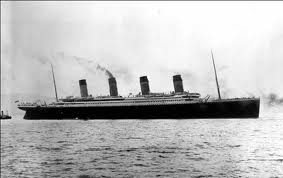
Lower image: RMS Titanic.

Wednesday, March 21, 2012

Samuel Beckett. Irish Author (13 April 1906 – 22 December 1989).


Krapp’s Last Tape.


 A Review:
The play opens with Krapp sitting on his own behind an old desk. Aged 69, a writer filled with sadness and regret.  Since his early childhood Krapp has yearned for happiness.  Upon reaching adulthood, on each birthday he has made an annual tape recording of his activities the previous year.  The day on which the play is set Krapp sits at his desk. It is sometime in the early evening.  Every year since he was 24, Krapp a failed writer, has recorded his impressions on tapes which he has catalogued in a ledger and locked in a box.  The play depicts Krapp as a weary old man, a clown like figure. He is wearing trousers that are too short for him, a sleeveless waistcoat, and a dirty looking white shirt without a collar. Upon his feet there is a pair of dirty white boots, very long, very narrow and pointed.  He has a pale face that seems to accentuate his purple nose.  He begins eating a banana, throwing the skin onto the floor he begins to chew, staring into the distance.  He turns and walks, slipping on the banana peel, clown like.  This is a bit of comic relief but the play is also tragic as you soon realise you are looking at a lonely old man, unfulfilled, full of regret, full of bitterness.

Krapp sits at his desk and begins to look in his ledger.  He is looking for a particular set of events. He finds what he seeks, box three spool five.  He speaks, “box three, spool five, box three, spoooooool fivvvve” and laughs at his own little joke.  His eyesight is not what it used to be, after all he is 69 and the years of writing in dark rooms have done him no favours.  Peering at the journal he begins to read an entry made 30 years previously when he was 39.  He fails to remember the events of which he has written.  “Memorable equinox”? “Farewell to love”, as he listens he peers into the distance, a blank look upon his face.  He reflects upon the past, he begins to relive the past while still in the present.  He start the tape running, “39 today, sound as a bell apart from my old condition” he hears his younger self begin.  As he listens he tries to forget while at the same time remembering. He tries to manipulate the spool, stopping and fast forwarding in order to block out events.  Krapp drinks a lot, maybe he is hoping to block out the past or the visions that haunt him?  “Viduity” he hears the voice say, what does that mean? Krapp looks in a dictionary, “Viduity. That state or condition of being or remaining a widow or widower” Being or Remaining, these words seem to have an effect upon Krapp and we will return to them again.

Krapp listens to his younger self describe an episode in a punt with a young lady, was this his one chance of love? He stops the tape as he tries to remember, rewinding the tape he replays it, he begins to relive the night as he listens to his younger self describe the events of the night.  He appears to bend over the tape machine, hugging it; touching it with his cheek in a display of intimacy he closes his eyes. Reaching out he turns off the tape, slowly he sits up, and looking into the distance he wipes his eyes and sobs.

Krapp takes out his watch from the pocket of his waistcoat, peering at its face.  A look of loss and regret is written upon his face and he pours another drink.  He begins to load an empty spool onto the tape machine as he prepares to record his latest tape.  He reaches into the pocket of his waistcoat and pulls out a slip of paper, looks at it but puts it down.  He turns on the machine and begins to speak.  “Hard to believe I was as bad as that”, he looks into the distance and begins to remember the girl in the punt, “the eyes she had”.  Once again he stops the tape.

Starting the tape once more he begins to speak, his voice full of frustration, “Maybe he was right, maybe he was right” he says. He stops the tape.  Once more he looks at the slip of paper, screws it up and throws it away.  He starts the tape, speaking into the microphone he realises his failure as a writer.  “Seventeen sold of which eleven were at trade price”.  He realises he has sacrificed his life and soul for nothing and each new day brings nothing but new tears and a step nearer to death.  He could have been happy with her; instead he has attempted to find solace with banana’s, alcohol, and old whores.  This he realises is his last tape, “leave it at that, leave it at that”

“Be again, be again”  The play ends with Krapp listening once more to spool five and the nights events spent in a punt with the love he could have had.  A look of despair upon his face as he realises his loss.  “Be again, be again.”

Time and memory are constant themes throughout Beckett’s play’s, they seem to stress the importance of ‘being’ within the human psyche. Being involves thinking and remembering. Remembering involves thinking of things that are not happening now, but happened before. We therefore exist both in the past and in the present. This is why time and memory are absurd.  Beckett allows the viewer/reader to interpret human existence with all its pains and joys while at the same time refusing to be drawn on his own thoughts.  What you see is what you get, there is no more. In many ways Krapp is everyman for we all have regrets.  How many of us would not turn the clock back if we could?  Beckett also uses light and darkness within many of his plays to emphasise the passage of time.  Light and darkness is also used to open and close the performance rather than the use of the curtain as seen in traditional theatre.  The use of light and darkness is a theme that runs throughout the play and we see it in the white dog playing with the black ball. On another occasion we hear Krapp reminiscing about the stark white uniform of the young woman pushing the black perambulator. This absence of colour draws you into the play and in some ways you begin to feel connected to the character.        

 Shakespeare wrote “to be or not to be”.  Krapp sits listening to silence.  He will inevitably die and his voice will also be silenced.  He will no longer be and he will no longer remain.  This play is longer than the text would first suggest as it is full of stops and starts and periods of silence.  These periods allow you to reflect upon the theme of Beckett’s play and marvel at the actor’s portrayal of this comic yet profoundly tragic figure.  You too are left with a feeling of loss for the character of Krapp.
Upper image = John Hurt in a potrayal of Krapp.
Middle image = John Hurt in a portrayal of Krapp.
Lower image = Samuel Beckett.
My apologies to those who follow this blog for my silence over the past few weeks. Upcoming exams are my excuse. May I wish you all a glorious Spring Equinox. I hope you enjoy my little review of Krapp's Last Tape. For those who wish to view some of Samuel Becketts play's they can be accessed on You Tube and I highly recommend you do so.

Sunday, January 15, 2012

W.B. Yeats. Born in Dublin, Ireland, in 1865. Died in 1939.


W. B. Yeats up to 1900. His early work.


W. B. Yeats family moved to London when he was two years old and he lived there until he was sixteen. His mothers traditional Irish songs and stories and his frequent holidays in County Sligo to his mothers relations kept the connection to Ireland strong. His first collection of poetry published in 1889, The Wanderings of Oisin and other poems already showed themes that would remain central to his writing, Ireland, myth, spiritualism, folklore and love.

Yeats became involved with the Celtic revival; this was a movement that sought to promote the spirit of Ireland’s heritage against the cultural influences of English rule in Ireland during the Victorian period. Yeats never learned the Irish tongue yet he was to draw extensively from the language and the ancient myths, legends, and folklore to reveal the connection between these traditions, the individual, and the nation. It was through the understanding of this connection that he came to realise the true reality that was hidden from those who failed to see it.

In 1885, Yeats met the Irish nationalist John O’Leary who was instrumental in arranging for the publication of Yeats first poems in the Dublin University Review and in directing Yeats attention to native Irish sources for subject matter. Under the influence of O’Leary, Yeats took up the cause of Gaelic writers at a time when most of the Irish literature was in danger of being lost as a result of England’s attempts to anglicise Ireland through a ban on the Gaelic language.

Yeats believed that the de-anglicising of Ireland did not depend on the preservation of its literature in the Gaelic language (Kelly, 2003). He wanted writers to translate the tales of the history and heritage of Ireland into English while retaining the best of ancient Irish literature that was represented in its style and rhythm. He wanted to build a bridge between the two and write about the histories and the romances of the great Gaelic heroes and heroines of the past. He wanted to make these tales known to the people believing that although the Irish tongue was an important part of our heritage we should not base our hopes of nationhood upon it. He said it was the tales that were immortal and not the tongue that first told them (Kelly, 203). W. B. Yeats became a champion of Celtic culture and his poetry was a celebration of all things Gaelic. Irish legend gave Yeats a way to be something more than a symbolist and he believed that as an Irish poet he could look to his own people for his best audience and to express the things that may interest them and that through this make them care for the land in which they lived.

Yeats was devoted to Irish nationalism, something that he shared with the love of his life, Maud Gonne. He believed in a non violent means of achieving this but she held the view that it was only through violent struggle that Ireland would gain her freedom. It has been suggested that it was this difference of opinion that led Yeats to compose the poem The Rose, and the fact that she married a military man may confirm this. Devotion to Irish nationalism and the promotion of Irish heritage is seen through his use of material from the ancient sagas within his poetry. The publication in English in 1889 when Yeats was twenty four of The Wanderings of Oisin which was based on the legend of the Fenian cycle brought Irish mythology to the Irish people –‘the language’ as he pointed out ‘in which modern Ireland thinks and does its business’. He also published several volumes of poetry during this period, notably Poems (1895)’ and The Wind Among The Reeds (1899) which also demonstrated his use of Irish folklore and legend.

Yeats died in 1939 and although buried in France his body was eventually returned to Ireland and is now buried in Drumcliff, County Sligo. Ironically the person in charge of this operation for the Irish government was Séan MacBride, son of Maud Gonne MacBride.


Top image W. B. Yeats.
Middle image Maud Gonne.
Lower image John O'Leary.

Collectors of Irish folk songs


Edward Bunting and Thomas Moore: Their role in Irish Traditional Music.


Edward Bunting 1773-1843. Born in Armagh.

He was an organist employed to notate the music played at the 1792 Belfast Harp Festival. There he lived with the McCracken family and associated with many of the members of the United Irish Society who had initiated the event. The purpose of the festival was to preserve the remnants of the Gaelic harp tradition for posterity. He was so taken with the group he decided to devote a large proportion of his time to the collection and publication of Irish music. In 1792 he toured County Mayo with Richard Kirwan founder of the Royal Irish Academy collecting a number of airs. His first publication appeared in 1796 and contained sixty six tunes (General Collection of the Ancient Irish Music 1796).

Bunting was the first that we know of to gather music from musicians in the field. He planned to include Gaelic text with his music but this was not successful. He provided tunes that lacked authenticity in relation to their original as he was aiming his publications at a particular market, the amateur musicians of the middle and upper classes. In 1809 he published the General Collection of the Ancient Music of Ireland. After 1809 he does not appear to have undertaken any major tour or collection. He spent most of his time working on what he had already collected. His final collection was published in 1840 (The Ancient Music of Ireland). These collections were revolutionary for their time, although later commentators have faulted Bunting's approach to a form of music with which he was unfamiliar. He died on 21st -December-1843 and is buried in Mount St. Jerome cemetery in Dublin.

Several collectors continued and extended Bunting's work during the nineteenth century, with George Petrie's Ancient Music of Ireland (1855); and Patrick Weston Joyce's Ancient Irish Music (1873) and Old Irish Folk Music and Songs (1909) being the most significant.

Thomas Moore 1779-1852. Born in Dublin.

Moore was born on 28 May 1779 at 12 Aungier Street, Dublin. Moore learned how to play the piano while eaves-dropping on his sister’s lessons. He had a gift for recitation and was frequently called upon by his family to entertain in the home. He was one of the few Catholics to enter Trinity College Dublin where he associated with many of those involved in the 1798 rebellion although he was not involved. He was a friend of Robert Emmet, whom he greatly admired and this consolidated his already nationalistic leanings. Another friendship he made in Trinity was with the collector Edward Hudson, they shared an interest in politics and music. Hudson got many of his airs from harpists and would play them for Moore on the flute.

More moved to London in 1799 where he became endeared to polite society. He was a fine conversationalist and after dinner singer so he was invited to all ‘high quality’ gatherings where he was to make many useful connections. In 1808 he began publishing the first of his Irish Melodies and this proved highly successful both critically and financially. However, by 1819 he was virtually bankrupt. He was a friend of Lord Byron and was appointed his literary executor and wrote his biography (the first of many) upon Byron’s death.

In 1822 he returned to his wife’s home in Wiltshire (he had lived on the continent from 1819-22). Here in his wife’s home he was to spend the rest of his life having survived his five children. He continued to write but eventually stopped due to mental illness and was granted a government pension in 1835.

Irish Melodies appeared between 1808 and 1834 in ten successive volumes and have ensured his place as one of Ireland’s ‘National’ poets. He was often criticised for pandering to the tastes of London society which was far removed from the reality of eighteenth and nineteenth century Ireland.

. An easing of the penal laws against Roman Catholics in 1793 allowed him to enter Trinity College, Dublin, with view to a legal career. A close friend was Robert Emmet, whose death inspired him to write 'O breathe not his name', but Moore stayed aloof from the United Irishmen. Another friend, Edward Hudson, awakened his interest in Irish music, and both were moved by the Irish airs of Edward Bunting.

In 1799, Moore entered the Middle Temple in London. It was his talents as a singer and pianist, however, which made him an immediate favourite of London society; when his translation of the Odes of Anacreon was published in 1800, he was able to dedicate it to the Prince Regent. In 1803, through the influence of Lady Moira, Moore became admiralty registrar in Bermuda, but soon appointed a deputy and returned to London.

In 1808, he published his first volume of Irish Melodies, with music by Sir John Stevenson; the tenth and last appeared in 1843. Many melodies, such as "The last rose of summer" and "Believe me if all those endearing young charms", were love songs, but patriotic ballads such as "The harp that once" and "The minstrel boy" were acceptable to the English as to the Irish. Moore had a regular income from the melodies, in return for his willingness to perform them, but his other writings proved less enduring, even though seven editions of his long oriental poem "Lalla Rookh" (1817) were published within a year.

In 1819, Moore fled to France to escape a debtor's prison after his deputy in Bermuda had stolen £6,000, but was able to return in 1822. He published biographies of Sheridan in 1825, Byron in 1830, and Lord Edward Fitzgerald in 1831, and an unusual novel-cum-history, Memoirs of Captain Rock (1824). His latter years were spent in the village of Sloperton, in Wiltshire where he died on 25 February 1852.

Top image Thomas Moore.
Lower image Plaque to Edward Bunting, St George's Church, High Street, Belfast, October 2009.

John Bush Travel Writer 1764.


Romantic view of Ireland during the 18th century.


During the 18th century Britain began to see the spread of towns, cities and industrialisation and society’s influence was often seen as corrupt. As a result a new movement began as a reaction against the materialism of the age which was already showing signs of making workers the slaves of machinery and of creating squalid urban environments. This movement became known as Romanticism and it inspired both writers and artists to seek out places that they believed represented areas of unspoilt nature.

Topographical artists such as George Barret Senior and James Arthur O’Connor painted romantic views of Ireland that showed the picturesque and sublime beauty of the landscape. Topographical writers such as Edmund Burke and John Bush wrote of the awe and wonder of nature in all her glory. Britain has many areas of natural beauty, the lake district of Cumbria, the Highlands of Scotland etc but from 1750 onwards it was the picturesque regions of Ireland that became increasingly popular and it was through the works of artists and writers that the scenery and landscape they depicted and in fact nature herself was to become a provider of entertainment.

John Bush wrote Hibernia Curiosa and it is from within the pages of this book that I have chosen descriptions to illustrate this. This book is written in the form of a letter to a friend in Dover, England. It appears to me that Bush has undertaken this journey in order to allow his friend to view Ireland through the eyes of another. Bush writes with a sense of wonderment as he travels around Ireland, the time is 1764 only twenty years after the famine of 1740. When he reaches Killarney, County Kerry, he is struck with a sense of awe as he views the landscape for the first time and he wonders at nature’s majesty. His friend in Dover has asked that he visits this place in particular and Bush attempts to describe the beauty of the lakes as best he can but assures his friend that even then he fails to do it justice.

He writes about the journey that immediately preceded his arrival there, he suggests that “Nature has neglected the rest of the countryside on purpose to lavish beauty on this her favourite spot” (Bush, p90). He then takes us further on his travels to the west end of the lake where he is struck with the sublime as he looks upon “A range of the most enormous mountains” (Bush, p91). Bush writes in a style that is reminiscent of Edmund Burke in that he describes the sublime force of nature and how he regards the terror of certain places. When you read Hibernia Curiosa you can almost feel his sense of emotion as he guides you through his use of words to an understanding of the sublime and the beautiful and he demonstrates through his writing the effect that they may have upon your emotions.

This comes through in his description of the Salmon-leap at Leixslip. He describes it as “One of the greatest beauties, of its kind, perhaps in the world” (Bush, p66). He describes “The verdant hills, this sylvan amphi-theatre” (Bush, p66). He refers to the way the waterfall hits the rocks below, how the water flies off in a thousand different directions with the sun shining on it and how it gives off all the colours of the rainbow (Bush, p69).

I feel that having read Hibernia Curiosa that central to this romantic vision was the belief that the further west you travelled, the more you came into contact with the ‘real’ Ireland uncontaminated by the influence of the city and its new industrial society. It gave me a new understanding of landscape, in some ways to me it has come to mean ‘an escape to the land’.

Extracts from Hibernia Curiosa (1764).
Top image Salmon-leap Leixslip
Middle image Lower lakes Killarney
Bottom image Title page of Hibernia Curiosa.
 
The importance of travel writer's led to the birth of the holiday industry. Thomas Cooke eventually started his package holiday company in 1841.

Monday, January 9, 2012

Tree Zodiac. Birch. Beith gheal.


Listen closely and you will hear whispers of rebirth and growth within your soul.
Birch. The Acheiver.
December 24 – January 20.
If you were born under the energy of the Birch you can be highly driven, and often motivate others they become easily caught in your zeal, drive and ambition. You are always reaching for more, seeking better horizons and obtaining higher aspirations. The Druids attributed this to your time of birth, which is a time of year shrouded by darkness, so consequently you are always stretching out to find the light. Birch signs (just like the tree) are tolerant, tough, and resilient. You are cool-headed and are natural-born rulers, often taking command when a situation calls for leadership. When in touch with your softer side, you also bring beauty in otherwise barren spaces, brightening up a room with you guile, and charming crowds with you quick wit. Celtic tree astrology Birch signs are compatible with Vine signs and Willow signs.
To the Druids, the Birch (often referred to as the "Lady of the Woods" due to its grace and beauty) represented renewal, rebirth and inception, since it was the first tree to come into leaf after the Winter Season. The Birch along with the Elder were said to stand on either side of the one "Nameless Day" (December 23). This slender but determined tree, which represented the seed potential of all growth, is hardier than even the mighty Oak and will thrive in places where the Oak will fail to flourish. It also signifies cleanliness and purity.

 The Birch once fulfilled many purposes...from providing handles for brooms and axes to the manufacture of cloth and children’s cradles. It is particularly well-known for its use in making writing parchment and oil from the bark was often used to treat skin conditions and depression. People were once "birched" in order to drive out evil spirits, while twigs were given to newlyweds to ensure fertility. Witches would use Birch twigs bound with Ash for their broomsticks or "besoms." Birch has been known to cure muscular pains and the sap used in the manufacture of wine, beer and vinegar. It is the rod of a Birch that Robin Red Breast used to slay the Wren in a furze or gorse bush on Saint Stephen's Day. In Wales, the Birch is a tree of love and wreaths of Birth are woven as love tokens. Its trunk was frequently used to form the traditional maypole and boughs were hung over cradles and carriages to protect infants from the glamour of the Little People.

There are two distinct types of Birch individuals (a division which relates to all Celtic Tree Signs). The "new moon" character is associated with the first two weeks of a sign and the "full moon" character is associated with the last two weeks.
The "new moon" Birch individual has a more impulsive and emotional nature, but is inclined to be subjective and/or introverted. The positive traits of these people are displayed by their resolve or faith in themselves in overcoming all obstacles, thereby being more tenancious in pursuing their objectives in life. The "full moon" Birch individual possesses a clarity of purpose combined with a visionary nature. Such people are inclined to be more objective and/or extroverted. The characteristic negative traits, however, hinge upon a lack of reality which can sometimes cloud the judgment.
In general, Birch individuals are determined, resilient and ambitious. Being goal-oriented, they make for excellent leaders, good organizers and supreme strategists. Usually undeterred by setbacks and possessed of an intense need to succeed, Birch individuals believe that hard work, patience and persistance will eventually triumph. Birch people are loyal, reliable and trustworthy, but prone to be reserved in displays of affection...although they are sociable with those they choose to socialize with. Personal limitations are not readily accepted by Birch individuals and due to their drive and ambition, there is sometimes a tendency to grow cynical. These people thrive best under a well-regimented lifestyle and are often known as the "workaholics" of society. Serious by nature with a somewhat droll sense of humor, Birch individuals sometimes aim to become less serious, which can lead to identity problems.
 There is a tendency for Birch people to become obsessive about health, but they are unlikely to be affected physically or mentally, having developed a powerful resistance. They prefer to keep a low profile, even in high office, preferring not to flaunt their successes, and have an acute sense of money, having worked hard to acquire their financial status. On the more negative side, Birch individuals can have a pessimistic attitude at times and may impose upon themselves a large amount of self-discipline. There is a tendency for the Birch individual to experience loneliness and successful marriages frequently occur later in life, since it is often difficult for such people to easily find someone willing to fit into their strict routine. Divorce is rare for those governed by the Birch...separations being more likely or the premature death of spouses. Birch people need a goal in life in order to avoid becoming depressed and pessimistic. They possess much individual potential but must cultivate great persistence in order to overcome personal setbacks.

A Happy New Year to all who follow this blog.


I am studying for my exams at the moment and this is why I am a little quiet (Blogwise) at the moment. My next post will be ready shortly.